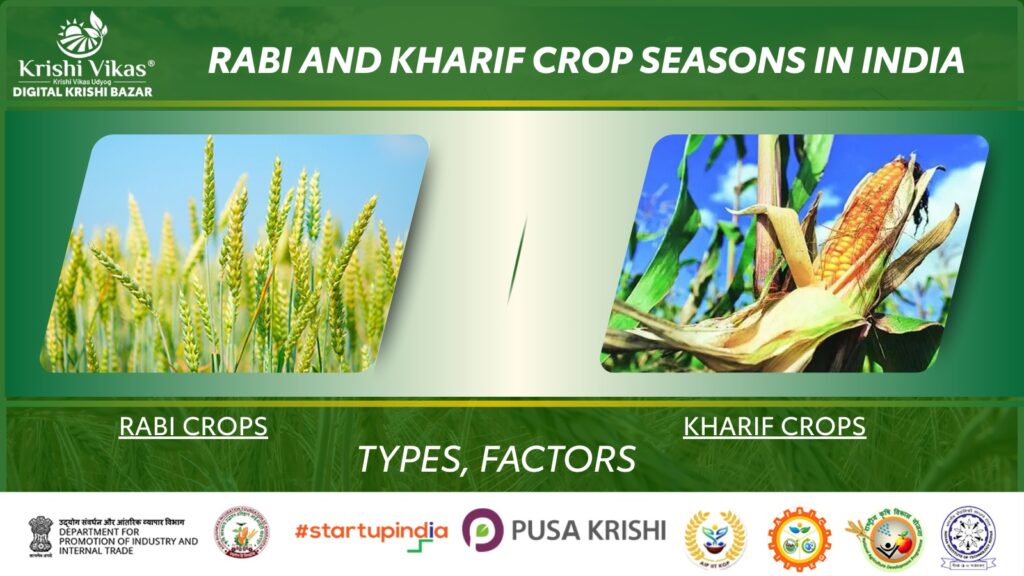
Agriculture in India follows a seasonal cycle, mainly divided into Rabi and Kharif crop seasons. These two farming periods play a crucial role in ensuring food security and supporting farmers’ livelihoods. Understanding their differences, crop types, and influencing factors helps us appreciate how Indian agriculture functions throughout the year. For the detailed analysis, let’s have a look in the following section.
Two Main Crop Seasons of India
India’s agriculture is largely dependent on seasonal patterns, especially rainfall and temperature. Based on these climatic conditions, the agricultural year in India is divided into two major crop seasons: (1) Rabi & (2) Kharif. These seasons determine when crops are sown, grown, and harvested across different regions of the country.
The Kharif season begins with the onset of the monsoon, usually from June to July, and crops are harvested between September and October. These crops depend heavily on rainfall. On the other hand, the Rabi season starts in October after the monsoon ends, and crops are harvested during March to April. Rabi crops require cooler temperatures and often depend on irrigation. Together, these two crop seasons form the backbone of Indian agriculture and play a vital role in food production, rural employment, and the overall economy of the country.
Everything About Rabi Crops
Rabi crops are grown during the winter season in India and form one of the most important parts of the country’s agricultural cycle. These crops are sown after the monsoon ends and harvested in the spring season. Rabi crops generally require cool temperatures for growth and depend more on irrigation than rainfall, making them suitable for regions with controlled water supply.
Important Information on Rabi Crops
| Factor | Details |
| Season | Winter |
| Sowing Time | October to November |
| Harvesting Time | March to April |
| Climate Needed | Cool temperature during growth, warm and dry weather at harvest |
| Rainfall Dependency | Low (mostly depends on irrigation) |
| Water Requirement | Moderate |
| Best Suitable Regions | North India, Central India, and irrigated areas |
| Major Rabi Crops | ● Wheat● Barley● Gram (Chickpea)● Mustard● Peas● Lentils |
Everything About Kharif Crops
Kharif crops are grown during the monsoon season in India and depend largely on rainfall for their growth. These crops are sown at the beginning of the rainy season and harvested at the end of the monsoon. Kharif crops require warm temperatures and sufficient moisture, making them suitable for regions that receive moderate to heavy rainfall.
Key Information about Kharif Crops
| Factor | Details |
| Season | Monsoon |
| Sowing Time | June to July |
| Harvesting Time | September to October |
| Climate Needed | Warm temperature and high humidity |
| Rainfall Dependency | High (mostly rain-fed) |
| Water Requirement | High |
| Best Suitable Regions | Eastern India, Coastal regions, Central India |
| Major Kharif Crops | ● Rice (Paddy)● Maize● Cotton● Sugarcane● Bajra (Pearl millet)● Jowar (Sorghum)● Groundnut● Soybean |
Summing up
Rabi and Kharif seasons highlight how closely Indian farming is connected to climate and natural resources. Each season demands specific crops, field practices, and water management techniques. By aligning agricultural planning with these seasonal patterns, farmers can reduce risks, improve yields, and make better use of technology and mechanisation, ensuring long-term growth and stability in the agricultural sector.