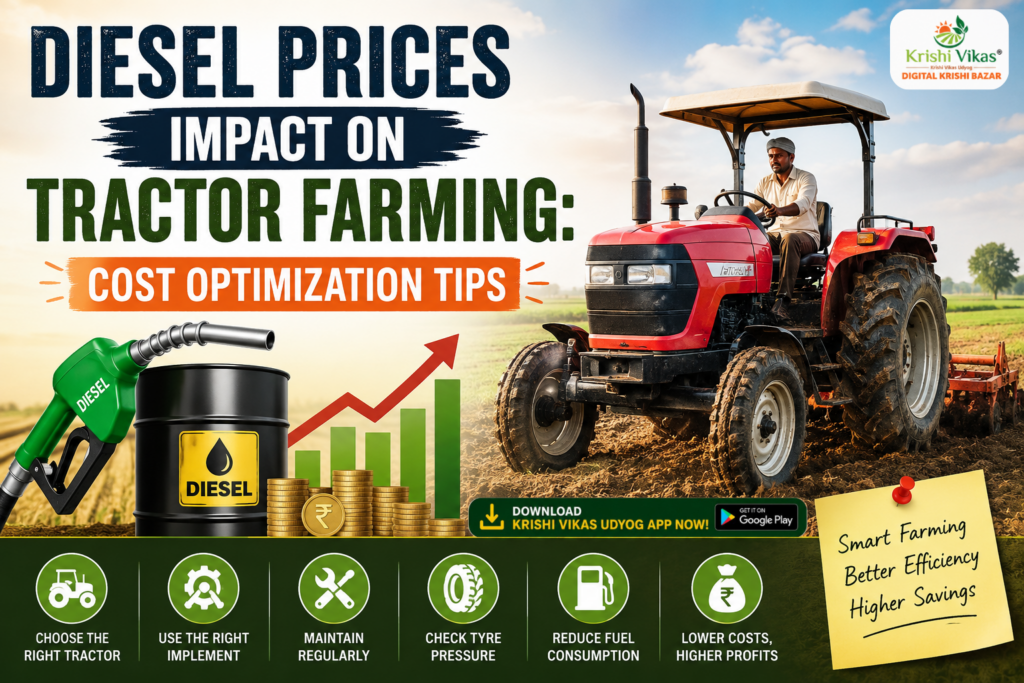
Diesel Prices Impact on Tractor Farming
For farmers, diesel is not just another expense. It is one of the regular costs that comes with almost every stage of farming. From preparing the land and sowing seeds to transporting crops and running different farm implements, tractors are used throughout the season. So, when diesel prices go up, the cost of farming can go up too. Farmers cannot control the price of diesel or diesel fuel price increase but they can control how efficiently they use it. A few changes in tractor operation, maintenance and field planning can help reduce unnecessary fuel consumption and keep farming costs under control. Also read Post Monsoon Tractor Maintenance vlog at Krishi Vikas.com. Diesel Prices Impact on Tractor Farming: Cost Optimization Tips.
How Do Diesel Prices Affect Tractor Farming?
Tractors are used for many different jobs, but some operations require much more fuel than others. Heavy ploughing, rotavation, transportation and working on hard soil can put a greater load on the tractor engine. When petrol and diesel price increase and become expensive, every extra hour that a tractor spends in the field matters. Even unnecessary trips across the field or repeated passes can add to the total fuel bill. This is why farmers should look at fuel consumption per acre, rather than simply thinking about how much diesel the tractor uses in an hour. A tractor that uses a little more fuel per hour but finishes the job quickly may actually be more economical than one that takes much longer to cover the same area.
Cost Optimization Tips
1. Choose a Tractor That Matches Your Farm
Buying a tractor is a major investment, so choosing the right horsepower is important. A tractor that is too small for the work may struggle with heavy implements. The engine has to work harder, which can increase fuel consumption and put additional stress on the machine.
At the same time, buying a much larger tractor than your farm actually needs can increase the purchase price, maintenance expenses and fuel costs.The best tractor is not necessarily the biggest one. It is the one that can comfortably handle your regular farm work without wasting power or fuel.
Before buying a tractor, one needs to consider the following factors –
- Farm size
- Soil type
- Main crops
- Implements
- Tillage requirements
- Transportation needs
- Expected yearly tractor usage
2. Use the Right Implement
Using an implement that is too large for the tractor can put excessive load on the engine. On the other hand, an implement that is too small may force you to make several extra passes over the field. For example, if the right rotavator can prepare the soil in one or two passes, there may be little benefit in making additional passes. The aim should be simple: get the required work done with the least number of passes possible.
3. Avoid Unnecessary Trips Across the Field
Sometimes farmers make extra passes because the soil does not look perfectly prepared, even though it may already be suitable for sowing. In other situations, poor planning can result in the tractor repeatedly travelling over the same area. Every time the tractor moves across the field, it uses fuel. Planning the sequence of farm operations properly can save both diesel and time. If one implement can complete a particular task effectively, there may be no need to repeat the same operation with another implement.
4. Keep Your Tractor Well Maintained
A tractor that is regularly serviced is generally easier to operate and can perform its work more efficiently. Regular maintenance and tractor repair does not just protect the tractor it can also help reduce unnecessary fuel consumption. Small maintenance issues can become expensive problems if they are ignored. A dirty air filter, old engine oil or worn-out parts can affect tractor performance and increase the load on the engine.
Check important components such as:
- Engine oil
- Air filter
- Fuel filter
- Coolant
- Tyre pressure
- Battery
- Belts and hoses
- Hydraulic system
5. Check Tyre Pressure Regularly
Tyres may not seem directly related to diesel savings, but they play an important role in how efficiently the tractor transfers power to the ground. If tyre pressure is incorrect, the tractor may lose traction and experience excessive wheel slip. In simple terms, the wheels can spin without moving the tractor forward efficiently. This means the engine is using fuel without getting the maximum amount of useful work from it. Check tyre pressure regularly and follow the manufacturer’s recommended settings for your tractor and the type of work being done.
6. Don’t Always Run the Tractor at High RPM
Many operators believe that running the tractor at higher engine speed automatically means better performance. If the job can be completed comfortably at the recommended engine speed, unnecessarily increasing the RPM can waste fuel. Using the right gear and maintaining an appropriate engine speed can help the tractor work smoothly without putting unnecessary load on the engine.
7. Reduce Wheel Slip
Wheel slip is another common reason for wasted fuel during heavy fieldwork. If the tractor tyres are spinning too much, the engine is working hard but the tractor is not moving forward as efficiently as it should. If you notice excessive wheel spinning while ploughing or tilling, it is worth checking whether the tractor and implement are properly matched and adjusted. The right tyre pressure, suitable ballast, proper implement adjustment and appropriate working conditions can help improve traction.
8. Choose the Right Time for Field Operations
Trying to work extremely hard and dry soil can put a heavy load on the tractor. On the other hand, working when the soil is excessively wet can lead to poor traction and wheel slip. Farmers should plan tillage and other field operations when soil moisture is suitable.
9. Don’t Keep the Tractor Idling Unnecessarily
During short breaks or while waiting for another operation, unnecessary idling can gradually add to fuel consumption. A tractor that is standing still with the engine running is still consuming diesel. If the tractor is going to remain unused for a longer period, shutting it down when safe and appropriate can help avoid wasting fuel. A few minutes of idling may not seem important, but over an entire farming season, those minutes can add up.
10. Avoid Overloading the Tractor
Overloading the tractor or trailer can increase fuel consumption and put additional stress on the engine, transmission, tyres and brakes. Keep loads within the recommended limits and distribute them properly. A tractor that is working within its suitable load range can generally perform transportation work more efficiently.
11. Consider Tractor Hiring
For farmers with smaller landholdings or limited tractor requirements, tractor leasing or hiring a tractor when needed can sometimes be more practical than purchasing one. If the tractor is used only for a few days each year, compare the total ownership cost with the cost of hiring before making a decision.
Owning a tractor involves more than paying for diesel. You also need to consider:
- Purchase cost
- Servicing
- Repairs
- Insurance
- Depreciation
- Storage
- Operator costs
12. Don’t Choose a Tractor Only Because It Has More Horsepower
A high-horsepower tractor can be useful for heavy-duty farming, but if your regular work does not require that much power, you may end up paying more for a machine that you do not fully use. More horsepower does not automatically mean better value. When comparing tractors, consider the factors like fuel efficiency, performance, tractor maintenance, service tractor support , spare parts availability and resale value. The right tractor should provide enough power for your work without unnecessary running costs.
A Simple Fuel-Saving Checklist
- Is the tyre pressure correct?
- Is the air filter clean?
- Is the engine oil at the correct level?
- Is the implement suitable for the tractor?
- Is the implement set at the required depth?
- Am I using the correct gear?
- Is the tractor experiencing excessive wheel slip?
- Do I really need another pass over the field?
- Am I leaving the tractor running unnecessarily?
- Am I tracking diesel use per acre?
Summing Up
Diesel prices increase can put pressure on a farmer’s budget, especially during busy farming seasons when tractors are working for long hours. Choosing the right tractor, matching it with the right implements, keeping it properly maintained and avoiding unnecessary field passes can all help reduce fuel consumption.
Farmers should also remember that fuel efficiency is only one part of the total cost of tractor ownership. Purchase price, maintenance, reliability, productivity and resale value are equally important when choosing a tractor. Rising diesel costs? Discover smart tractor fuel-saving tips to cut farming expenses, improve efficiency, and get more from every litre. Diesel Prices Impact on Tractor Farming: Cost Optimization Tips. At the end of the day, every litre of diesel saved is money that stays in the farmer’s pocket. With better planning and smarter tractor operation, even small fuel savings can make a noticeable difference over an entire farming season.
FAQs
1. Why do diesel prices have such a big impact on farming?
Tractors are used for many important farming activities, including ploughing, tilling, sowing, transportation and operating implements. Higher diesel prices therefore increase the cost of several farm operations.
2. What is the easiest way to reduce tractor fuel consumption?
Start with the basics like maintain the tractor regularly, use the correct implement, avoid unnecessary field passes, maintain proper tyre pressure and operate the tractor at the recommended gear and engine speed.
3. Does tractor horsepower affect diesel consumption?
Yes. A tractor that is too small for the job may struggle and consume more fuel under heavy load. A tractor that is much larger than necessary can also increase operating costs. Matching horsepower to the farm’s requirements is important.
4. Can proper tyre pressure save diesel?
Yes. Correct tyre pressure can improve traction and reduce excessive wheel slip, helping the tractor use its power more effectively.
5. Is buying a fuel-efficient tractor enough to reduce farming costs?
Not by itself. The tractor also needs to be properly maintained and operated. The choice of implement, soil conditions, driving habits and number of field passes can all affect fuel consumption.
6. How can farmers measure tractor fuel efficiency?
Keep track of the diesel used, operating hours and area covered. Calculating fuel consumption per acre can help you understand how efficiently the tractor is performing different farming operations.