A tractor is a long-term investment, but even a well-maintained tractor eventually needs replacement parts. Filters, clutch components, bearings, hydraulic parts, electrical components and engine parts can all wear out with regular field use. For farmers, the challenge is not only finding the right tractor spare part but also buying a genuine, compatible component at a reasonable price. Spare-part costs can vary significantly depending on the tractor brand, model, part quality, supplier and whether the component is OEM or aftermarket. The tractor spare parts guide explains where to buy tractor spare parts, typical costs, OEM vs aftermarket options and how to avoid overpaying or buying the wrong part. Also read the Tractor Models Ranked by Fuel Efficiency | 2026 Comparison blog at Krishi Vikas.com.
What Are Tractor Spare Parts?
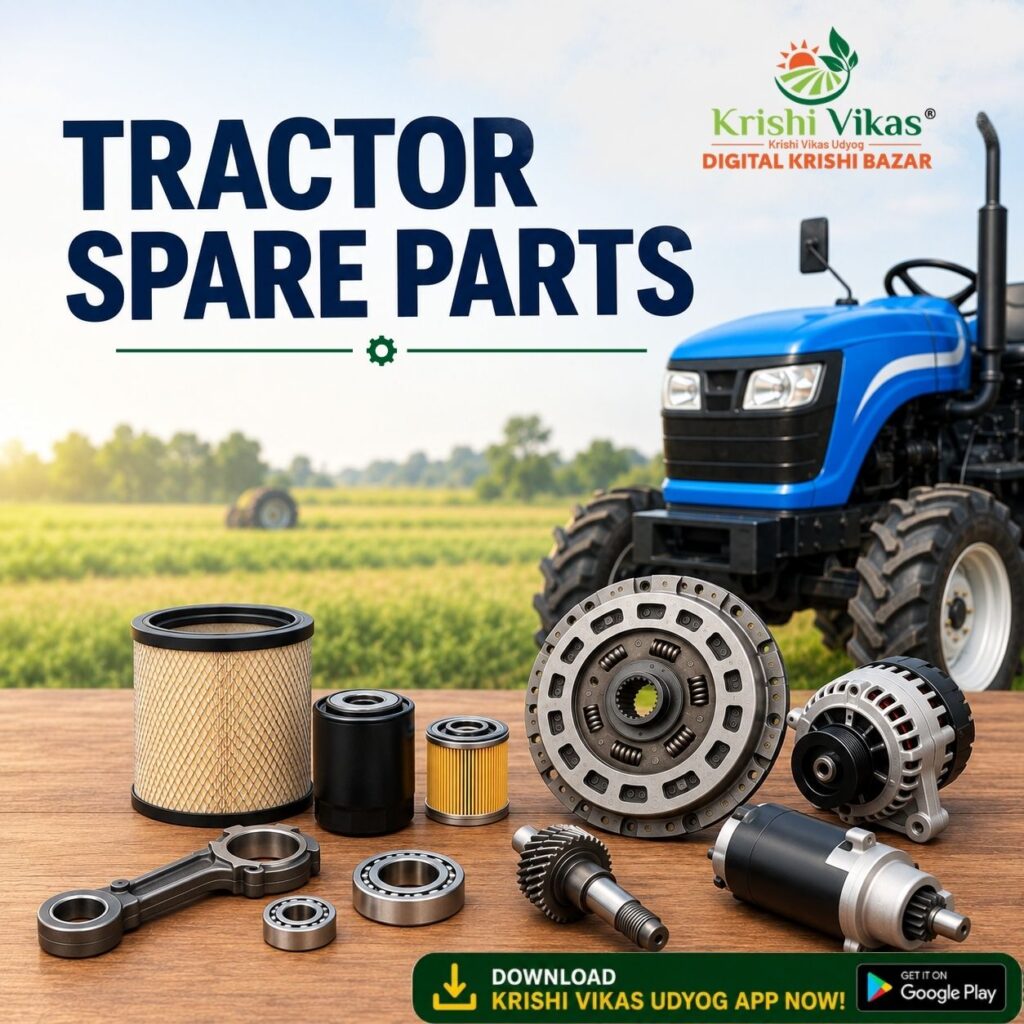
Tractor spare parts are replacement components used to repair, maintain or restore a tractor’s performance. They range from inexpensive filters and seals to expensive engine, transmission and hydraulic components. The correct part depends on the tractor brand, model, variant and sometimes the manufacturing year or serial number.
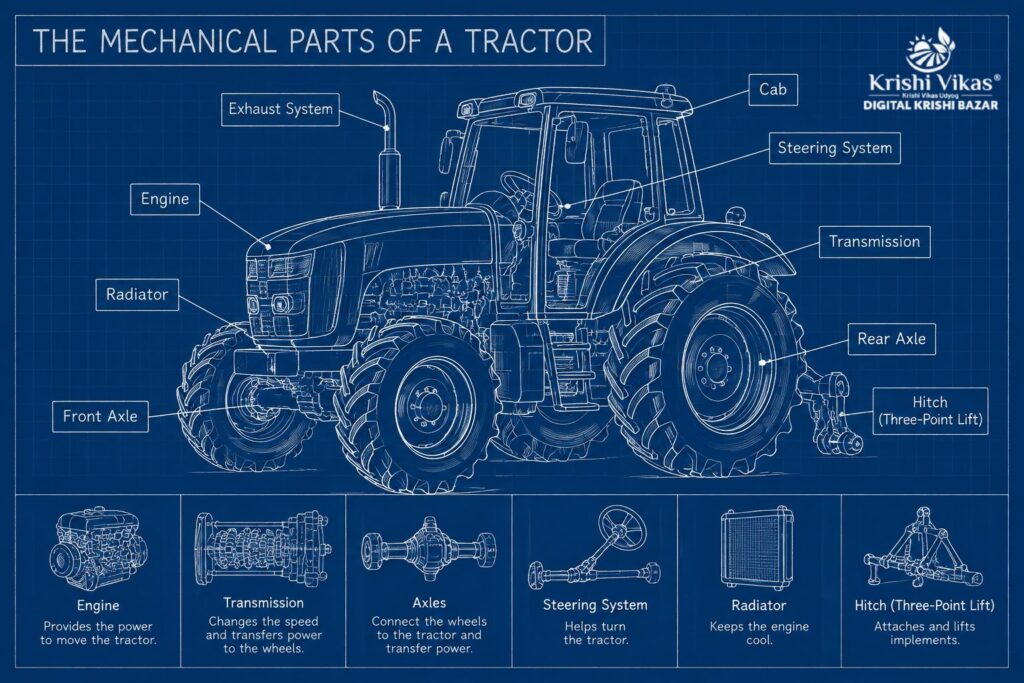
Common categories include:
- Engine parts
- Clutch and transmission parts
- Hydraulic components
- Brake components
- Steering parts
- Electrical parts
- Cooling-system components
- Filters and belts
- PTO components
- Bearings, bushes and seals
- Linkage and three-point hitch parts
- Body and exterior components
Where Can Farmers Buy Tractor Spare Parts?
1. Authorised Tractor Dealers
An authorised dealer is generally the safest option when you need a genuine OEM component. Dealers can usually identify parts using the tractor’s model and chassis/serial information. Manufacturer service networks may also provide estimated parts and labour costs. For example, Sonalika’s official service platform provides model-specific service-cost estimates and allows customers to find dealers.
Best for: Engine components, Hydraulic pumps, Transmission parts, Electronic/electrical components, Model-specific parts, Warranty-related repairs
Advantage: Better confidence in authenticity and compatibility.
Disadvantage: Genuine parts can cost more than some aftermarket alternatives.
2. Local Tractor Spare-Part Shops
Local spare-parts markets are widely used by farmers because they can provide quick access to commonly required components. These shops may stock parts for multiple brands, including Mahindra, Swaraj, Sonalika, John Deere, Massey Ferguson, New Holland and Eicher. Always verify the part number and compatibility before purchasing.
3. Online Spare-Part Platforms
Online suppliers can be useful when a specific component is unavailable locally. They also make it easier to compare prices between suppliers. Some online agricultural-part sellers provide pan-India delivery and catalogues covering multiple tractor brands.
4. Tractor Workshops and Service Centres
For complicated repairs, buying the part through a reliable workshop can be practical because the mechanic can identify the failed component and install it correctly. However, ask for a separate breakdown of parts and labour costs rather than accepting only one combined repair amount.
Tractor Spare Parts Cost Breakdown
There is no single price list applicable to every tractor. Prices vary according to brand, model, specification, quality and supplier.
The following ranges provide a general market reference, not a fixed price quotation.
| Spare Part | Indicative Price Range |
| Engine oil filter | ₹150–₹350 |
| Air filter | ₹300–₹1,200 |
| Fuel filter | ₹200–₹500 |
| Clutch plate/set | ₹1,500–₹6,000 |
| Bearing | ₹80–₹800+ |
| Hydraulic pump | ₹3,000–₹15,000 |
| Starter motor | ₹2,800–₹6,500 |
| Alternator | ₹2,200–₹5,500 |
| Injector/nozzle | ₹900–₹2,500 |
| PTO components | ₹1,500–₹5,000 |
| Piston kit | ₹2,500–₹6,000 |
| Engine overhaul kit | ₹4,500–₹18,000 |
| Brake components | ₹1,000–₹8,000 |
OEM vs Aftermarket Tractor Spare Parts
OEM/Genuine Parts
OEM parts are designed to meet the manufacturer’s specifications for a particular tractor.
Advantages:
- Designed for specific model compatibility
- Consistent specifications
- Generally better fitment confidence
- Useful for critical engine, transmission and hydraulic repairs
- Lower risk of compatibility problems
Disadvantage: They can be more expensive.
Aftermarket Parts
Aftermarket parts are manufactured by companies other than the original tractor manufacturer. The cheapest component is not necessarily the cheapest solution over the tractor’s lifetime. A low-quality part that fails repeatedly can increase labour costs and downtime.
Advantages:
- Often lower purchase price
- More supplier options
- Useful for certain routine replacement items
Risks:
- Quality varies between manufacturers
- Fitment may differ
- Lower-quality parts may have shorter service life
What Makes Tractor Spare Parts Expensive?
1. Tractor Brand and Model
Parts for popular or newer models may be easier to source, while components for older or discontinued tractors can sometimes be harder to find.
2. Part Type
Simple filters and seals generally cost less than hydraulic pumps, injectors, clutch assemblies or engine overhaul kits.
3. OEM vs Replacement
Genuine manufacturer parts generally command a premium over many aftermarket alternatives.
4. Material and Manufacturing Quality
A high-quality bearing, gear or hydraulic component can cost more because of its material specifications and manufacturing standards.
5. Availability
Rare or model-specific parts can cost more because of limited availability and additional logistics.
6. Quantity
Workshops and dealers purchasing multiple parts may receive different pricing from retail buyers.
7. Location and Delivery
Transportation and availability can affect the final price, particularly when parts have to be sourced from another city or state.
How to Check Whether a Spare Part Is Genuine
Before purchasing an expensive component, farmers should take a few precautions. Don’t purchase a critical engine or hydraulic component simply because it is the cheapest option available.
Check the following:
- Part number – Match it with the tractor’s parts catalogue or dealer information.
- Packaging – Look for proper manufacturer packaging and labels.
- Manufacturer details – Check the brand and supplier information.
- Invoice – Ask for a proper bill showing the part and applicable taxes.
- Compatibility – Confirm the exact tractor model and variant.
- Warranty – Check whether the component carries a warranty.
- Price – An unusually low price can be a warning sign.
How to Reduce Tractor Spare-Part Costs
1. Follow the Recommended Service Schedule
Regular servicing can help identify worn components before they cause major failures. Service intervals should always be based on the tractor manufacturer’s recommendations.
2. Compare Multiple Quotes
For expensive components, compare quotations from:
- Authorised dealers
- Reputed local spare-part dealers
- Established online suppliers
Compare the same part number and specification, rather than comparing different-quality components.
3. Buy Common Consumables in Advance
If your tractor regularly requires filters, belts or other consumables, maintaining a small stock can reduce downtime during peak farming operations.
4. Don’t Delay Small Repairs
A worn bearing, seal or belt may be relatively inexpensive to replace. Ignoring it can sometimes lead to damage to more expensive components.
Tractor Spare Parts: Cost vs Downtime
Spare-part purchasing should not be viewed only as a price comparison.
For farmers, tractor downtime can have a much larger economic impact during sowing, harvesting or other time-sensitive operations.
Example – saving ₹1,000 on a component may not be worthwhile if a poor-quality part fails during peak season and leaves the tractor unavailable for several days.
For critical components, consider:
Purchase price + installation cost + expected service life + downtime risk
How Krishi Vikas Help Farmers
Finding the right spare part is easier when farmers have access to reliable tractor dealers and service providers.
Krishi Vikas helps farmers connect with tractor dealers and make more informed tractor-related decisions. When a tractor requires maintenance or replacement parts, farmers can use the same dealer network to identify suitable service and support options.
Before purchasing a spare part, farmers should provide the tractor brand, exact model, part name and part number/chassis details where available. This can make it easier for dealers to identify the correct component and provide an accurate quotation.
Final Takeaway
Tractor spare parts are an unavoidable part of tractor ownership, but farmers can control maintenance expenses by buying the correct component, comparing genuine and quality aftermarket options, checking part numbers and choosing reliable suppliers. For expensive repairs, don’t focus only on the lowest quotation. Consider part quality, compatibility, installation cost, warranty and potential downtime. A little care when purchasing spare parts can help farmers avoid repeat repairs and keep their tractors productive throughout the farming season.
Frequently Asked Questions
1. How much do tractor spare parts cost in India?
Prices vary widely. Basic filters can cost a few hundred rupees, while clutch assemblies, hydraulic pumps and engine overhaul components can cost several thousand rupees or more.
2. Is it better to buy genuine tractor spare parts?
For critical components such as engine, transmission and hydraulic parts, genuine/OEM components can provide greater confidence in compatibility. For some routine components, quality aftermarket parts may also be suitable.
3. Where should I buy tractor spare parts?
Authorised dealers are generally the safest choice for genuine model-specific parts. Reputed local dealers and established online suppliers can also be useful for comparison and availability.
4. How can I find the correct spare part for my tractor?
Provide the brand, exact model, variant and part number to the dealer or supplier. For difficult-to-identify components, the tractor’s chassis/serial information can also help.
5. Are aftermarket tractor parts cheaper?
Often, yes, but prices and quality vary. Compare parts with the same specifications rather than choosing solely on price.
6. Should I keep spare parts at home?
Keeping commonly used consumables such as filters, belts or fuses may be useful, particularly during busy farming seasons. Avoid stocking expensive components unless they are frequently required or difficult to source.