
July Monsoon Wrap-Up: Summary 2026
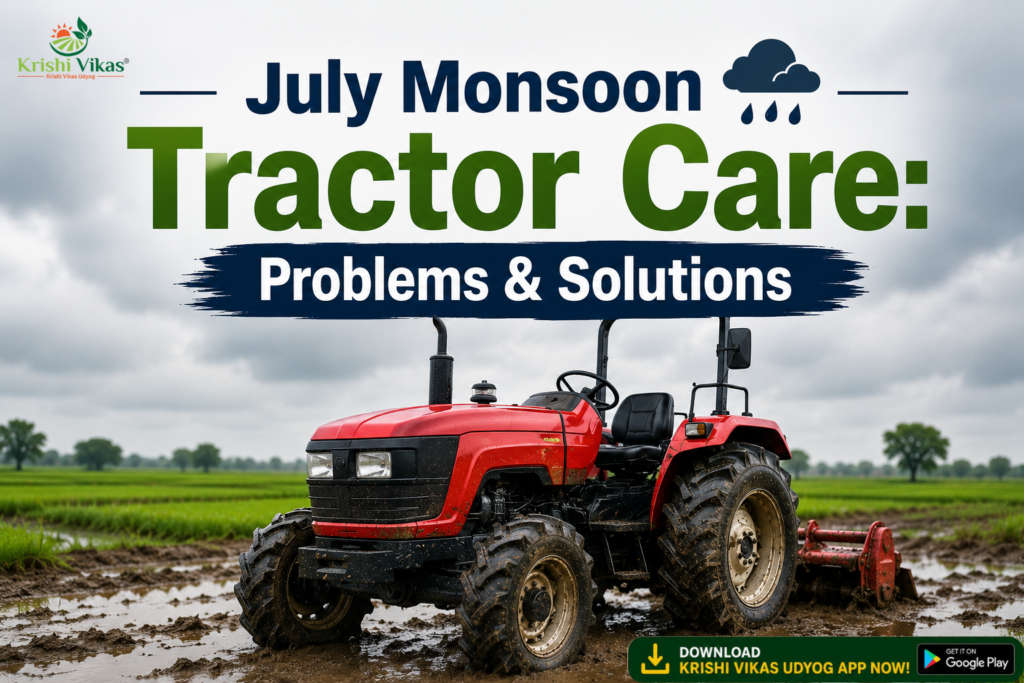
July can be one of the toughest months for tractors. Continuous rain, muddy fields, high humidity and long working hours put extra pressure on almost every part of the machine. From the engine and tyres to the battery, hydraulics and brakes, monsoon conditions can create problems that may turn into costly tractor repairs if ignored. As July 2026 comes to an end, this is a good time for farmers to give their agricultural equipment a proper tractor service and check-up. A little cleaning and tractor maintenance now can help avoid unexpected breakdowns when the tractor is needed again in August. July Monsoon Tractor Care – Problems & Solutions. Also read Post Monsoon Tractor Maintenance blog at Krishi Vikas.com.
Tractor Problems & Solutions
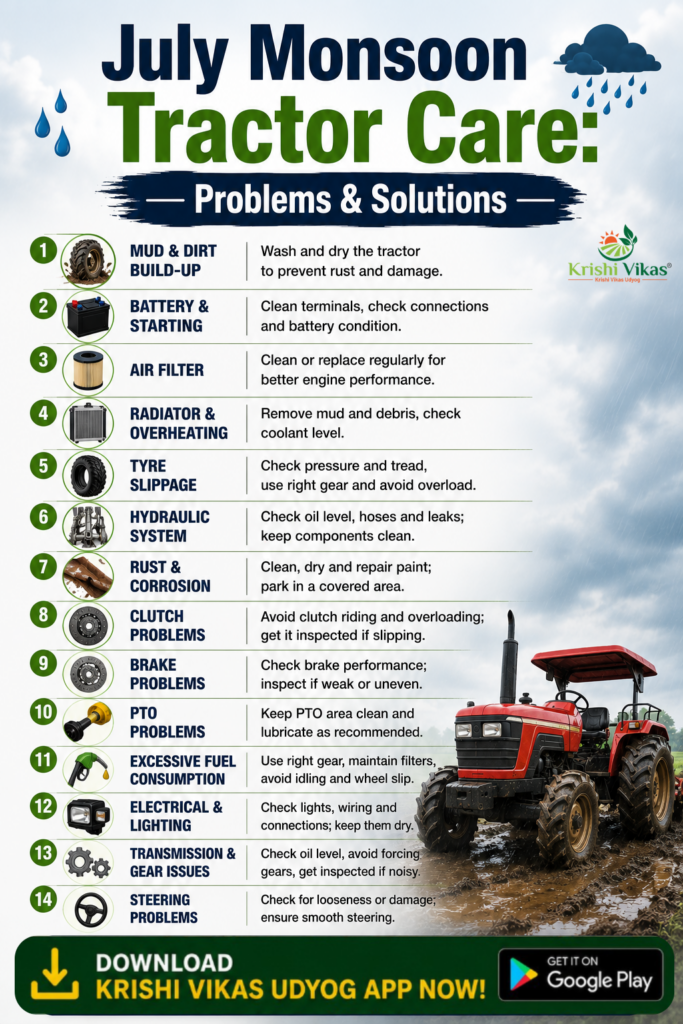
1. Mud and Dirt Build-Up
Problem – Wet fields mean plenty of mud. After a long day of work, mud can stick to the tyres, chassis, axle, hydraulic linkage, radiator grille and underbody. If it stays there for days, the moisture can encourage rust and affect moving components.
Solution – Give the tractor a thorough wash after heavy work in muddy conditions. Pay extra attention to the underbody, wheels, axle, hydraulic areas and other places where mud tends to collect. Once the tractor is clean, allow it to dry properly before parking it. Avoid leaving thick layers of wet mud on the tractor for several days.
2. Battery and Starting Problems
Problem – Rain and humidity can cause moisture and corrosion around battery terminals and electrical connections. As a result, farming machinery may take longer to start or may not start properly.
Solution – Check the battery terminals regularly. If you see corrosion, clean it carefully and make sure the connections are tight and dry. If your tractor is taking longer than usual to start, don’t ignore it. Check the battery condition and have the electrical system inspected if the problem continues.
3. Dirty or Wet Air Filter
Problem – During the monsoon, the air filter can collect dust, moisture and debris. A clogged filter restricts the amount of clean air reaching the engine, which can affect tractor performance and fuel efficiency.
Solution – Check the air filter regularly if the tractor is being used for long hours. Clean or replace it according to the manufacturer’s recommendations. If the filter is wet, badly damaged or heavily clogged, replacing it may be the better option.
4. Radiator Blockage and Engine Overheating
Problem – Mud, grass, leaves and crop residue can build up around the radiator grille while working in wet fields. When airflow is restricted, the engine may start running hotter than normal.
Solution – Make it a habit to check the radiator grille and remove mud, grass and other debris. Also check the coolant level as recommended by the tractor manufacturer. If the engine continues to overheat even after the radiator area has been cleaned, stop using the tractor and have the cooling system checked by a professional.
5. Tyre Slippage in Wet Fields
Problem – Waterlogged and soft soil provides less traction, making it easier for tractor tyres to spin. This becomes more noticeable when pulling heavy implements. Excessive wheel slip not only reduces work efficiency; it can also lead to unnecessary fuel consumption.
Solution – Before entering a wet field, check tyre pressure and tread condition. Maintain the tyre pressure recommended for your tractor and the type of work being carried out. Choose the right gear for the field conditions and avoid putting unnecessary loads on the tractor. If your farm regularly has waterlogged or difficult terrain, a 4WD tractor may be worth considering for better traction.
6. Hydraulic System Problems
Problem – Hydraulics play an important role when operating implements such as cultivators, rotavators and other equipment. During the monsoon, moisture, mud, damaged hoses or low hydraulic oil levels lead to leaks or poor lifting performance.
Solution – Check the hydraulic oil level and inspect hoses, pipes and connections for signs of damage or leakage. Keep the area around hydraulic components clean and make sure connections are secure. If an implement is lifting slowly, dropping unexpectedly or refusing to lift properly, get the hydraulic system checked. Never ignore a hydraulic oil leak, as continuing to operate the tractor could lead to more serious damage.
7. Rust and Corrosion
Problem – Rainwater and high humidity can speed up rust formation on exposed metal parts. Scratches, chipped paint and damaged protective coatings can make these areas even more vulnerable.
Solution – Wash and dry the tractor regularly, especially after working in wet and muddy conditions. Check the chassis, body panels, implements and other exposed metal parts for early signs of rust. If you find damaged paint or protective coating, repair it before corrosion spreads. Whenever possible, park the tractor under a covered, dry and well-ventilated shelter.
8. Clutch Problems
Problem – Long hours of field work can put extra stress on the clutch. If the clutch starts to wear out, you may notice slipping or difficulty transferring engine power efficiently.
Solution – Avoid unnecessarily riding the clutch while driving. Use the correct gear for the job and avoid overloading the tractor. If you notice clutch slipping, difficulty changing gears or unusual sounds, have it inspected instead of continuing to use the tractor as normal.
9. Brake Problems
Problem – Mud and moisture can affect braking components, while regular work in difficult conditions can increase wear.
Solution – Check the brakes regularly, especially before taking the tractor onto roads or carrying heavy loads. If the brakes feel weak, uneven or unusually hard, avoid demanding operations and arrange a professional inspection.
10. PTO Problems
Problem – The Power Take-Off (PTO) transfers power from the tractor to several agricultural implements. Mud and moisture around the PTO area can cause problems, while worn components may affect implement performance.
Solution – Keep the PTO area clean and follow the manufacturer’s recommended lubrication schedule. Before connecting an implement, inspect the PTO shaft, connection and safety guard. Most importantly, never operate a PTO-driven implement without the required safety guards in place.
11. Higher Fuel Consumption
Problem – Farmers may notice that their tractors use more diesel during monsoon operations. Wet soil naturally creates greater resistance, but excessive wheel slip, incorrect gear selection, overloaded implements and poor maintenance can increase fuel consumption even higher.
Solution – Keep the engine, air filter and fuel system properly maintained. Use the right gear for the job instead of unnecessarily running the engine at high speed. Maintain the recommended tyre pressure and try to minimise wheel slip. Make sure the implement is suitable for the tractor’s power capacity. Avoid unnecessary idling, particularly during long working days.
12. Electrical and Lighting Problems
Problem – Rainwater and humidity can affect wiring, switches, lights and electrical connections. This can become a safety concern when the tractor is being operated in poor visibility.
Solution – Check the headlights, indicators, warning lights and other electrical equipment. Look for visible wiring damage and make sure connections remain dry and secure. If a fuse keeps blowing or an electrical component repeatedly stops working, then get the system inspected instead of simply replacing the fuse again and again.
13. Transmission and Gear-Shifting Issues
Problem – Long hours of heavy fieldwork can put additional stress on the transmission. Difficulty changing gears, unusual noises or vibrations can be signs that something needs attention.
Solution – Check the transmission oil according to the manufacturer’s maintenance schedule and look for any leaks. Use the correct gear for the workload and avoid forcing gear changes. If shifting problems or unusual noises continue, get the tractor checked before a small issue becomes a bigger repair.
14. Steering Problems
Problem – Rough fields, mud and heavy loads can put additional pressure on steering components. Excessive steering play or an unusually loose steering response can make tractor operation unsafe.
Solution – Check the steering response before starting work. Look for damaged or loose components. If the steering suddenly becomes hard, loose or unstable, don’t take the risk of continuing to operate the tractor. Have it inspected first.
July Monsoon Tractor Care – Problems & Solutions
Tractor Maintenance Checklist for August
| Tractor Component | What to Check |
| Mud build-up | Wash and dry the tractor thoroughly |
| Battery | Clean terminals and check connections |
| Air filter | Clean or replace if clogged or damaged |
| Radiator | Remove mud, leaves and debris |
| Engine | Check oil, coolant and unusual noises |
| Tyres | Check pressure, tread and damage |
| Hydraulics | Check oil, hoses and leaks |
| Brakes | Check braking response |
| Clutch | Look for slipping or difficult engagement |
| PTO | Clean, inspect and lubricate as recommended |
| Electricals | Check lights, wiring and connections |
| Rust | Inspect exposed metal and damaged coatings |
| Transmission | Check oil and gear-shifting performance |
| Steering | Check for looseness or unusual resistance |
How to Prepare Your Tractor for August
Once the July monsoon work is over, don’t simply park the tractor and forget about it. Give it a proper inspection before the next major farming operation. Start by washing off accumulated mud and allowing the tractor to dry completely.
Then check the engine oil, coolant and other fluids. Take a close look at the tyres, battery, hydraulic system, brakes, clutch and PTO. It is also worth looking for small oil leaks, loose connections, damaged hoses and unusual sounds. These may seem like minor issues, but fixing them early protects the farmers from a breakdown when the tractor is needed most. July Monsoon Tractor Care – Problems & Solutions
When Should You Visit a Service Centre?
Not every tractor problem can or should be fixed at the farm. Some repairs require specialised tools and technical knowledge. Trying to repair complicated mechanical or electrical problems without the right tools or experience can sometimes make the damage worse. It is better to contact a trained mechanic, tractor service centre, or tractor workshop if you notice:
- Repeated engine overheating
- Difficulty starting
- Excessive smoke
- Major oil or coolant leakage
- Hydraulic failure
- Severe clutch slipping
- Weak or inconsistent brakes
- Unusual transmission noise
- Steering problems
- Repeated electrical failures
Summing up
The monsoon can be hard on tractors, but regular maintenance can prevent many common problems. Mud, moisture, wheel slip, clogged filters, battery issues, hydraulic leaks and rust may seem like routine issues, but ignoring them can lead to bigger repairs later. An end-of-July inspection is a simple way to catch problems early. Clean the tractor, check the components and get any serious issues repaired before the next major farming operation. With a little care at the end of July, your tractor can be better prepared for August and the rest of the farming season. July Monsoon Tractor Care – Problems & Solutions
Frequently Asked Questions (FAQs)
1. What are the most common tractor problems during the monsoon?
Common problems include mud build-up, tyre slippage, battery issues, clogged air filters, radiator blockage, hydraulic leaks, rust, clutch problems and electrical faults.
2. How often should I clean my tractor during the rainy season?
If you regularly work in wet or muddy fields, clean the tractor after heavy use. Pay particular attention to the underbody, tyres, radiator grille, axle and hydraulic components.
3. Why does my tractor slip more in wet fields?
Rain makes the soil softer and reduces tyre traction. Worn tread, incorrect tyre pressure, excessive loads and unsuitable gear selection can increase wheel slip.
4. How can I prevent my tractor from overheating during the monsoon?
Keep the radiator grille clean and regularly remove mud, grass, leaves and crop residue. Also check coolant levels and follow the manufacturer’s recommended maintenance schedule.
5. What should I do if my tractor is difficult to start?
Start by checking the battery terminals, battery condition and electrical connections. Moisture and corrosion can affect starting. If the problem continues, have the starting and electrical systems inspected.
6. How can I protect my tractor from rust during the monsoon?
Wash away mud and dirt regularly, dry the tractor properly and repair damaged paint or protective coatings. When possible, keep the tractor under a covered, dry and well-ventilated shelter.
7. What should I check in the hydraulic system after monsoon work?
Check the hydraulic oil level, hoses, pipes and connections for leaks or damage. If an implement lifts slowly, drops unexpectedly or fails to lift, have the hydraulic system inspected.
8. Why is my tractor consuming more diesel during the monsoon?
Wet soil creates more resistance and can naturally increase fuel consumption. Excessive wheel slip, incorrect gear selection, overloaded implements, clogged filters, and poor maintenance can further increase diesel usage.
9. Should I service my tractor at the end of July?
An end-of-July inspection is a good idea, particularly if the tractor has been working heavily throughout the monsoon. Checking the fluids, filters, tyres, brakes, hydraulics, battery and other important components can help identify problems early.
10. When should I take my tractor to a service centre?
Get professional help if you notice persistent overheating, unusual engine or transmission noises, hydraulic failure, serious oil leaks, weak brakes, clutch slipping, steering problems or repeated electrical faults.
11. Can I use my tractor immediately after washing it?
Allow the tractor to dry properly before using it again. Pay particular attention to electrical connections and areas where water may remain trapped.
12. How can I prepare my tractor for August?
Start by cleaning and drying the tractor thoroughly. Then check the engine and cooling system, tyres, battery, hydraulic hoses, brakes, clutch and PTO. Also look for leaks, rust, damaged components and unusual noises before beginning the next round of farm work.
July Monsoon Tractor Care – Problems & Solutions