
Post Monsoon Tractor Care: Maintenance Checklist for July–August
The monsoon season is a busy time for farmers. Tractors spend long hours working in wet fields, muddy tracks, and humid conditions. While they are built to handle tough jobs, constant exposure to rain and mud can gradually affect their performance. Moisture can cause rust, dirt can clog filters, and water may even damage electrical parts if left unchecked. Post Monsoon Tractor Maintenance. Also read Tractor Maintenance Tips During Rainy Season at Krishi Vikas vlogs.
As the rains begin to ease during July and August, now is the perfect time to give your tractor the attention it deserves. A little maintenance after the monsoon can help prevent expensive repairs, improve fuel efficiency, and keep your tractor ready for the next farming season.
Post-Monsoon Tractor Maintenance Tips
1. Wash Away Mud and Dirt
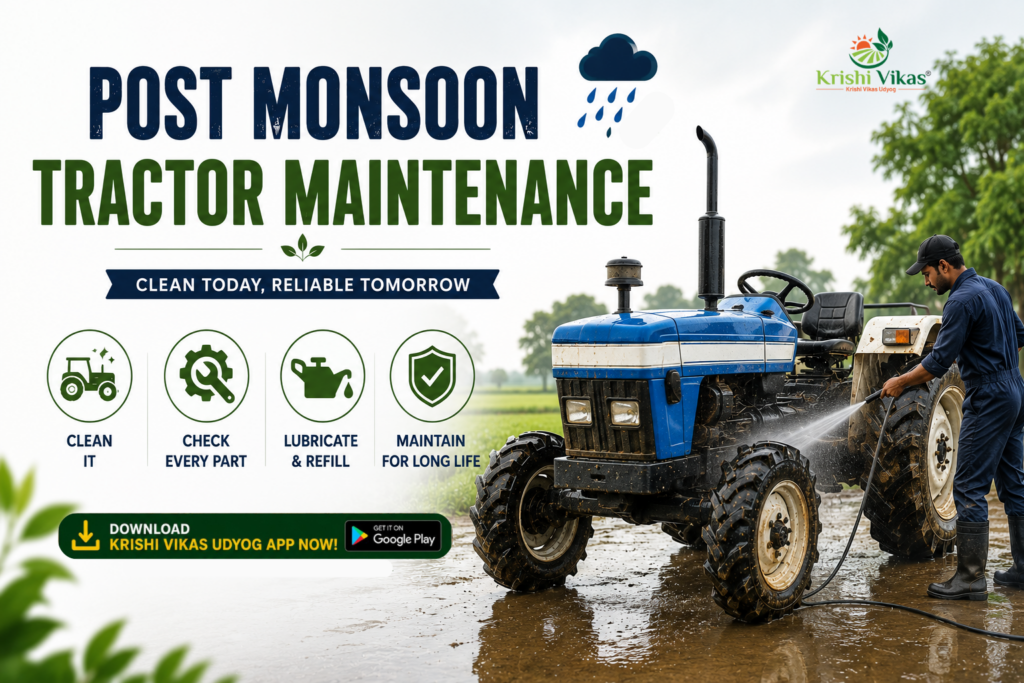
- The first step in post-monsoon tractor maintenance is a thorough wash. During the rainy season, mud, wet soil, crop residue, and grass often stick to the tractor’s body and undercarriage. If left unattended, this trapped moisture can lead to rust, corrosion, and damage to important components over time.
- Pay extra attention to areas where dirt tends to accumulate, such as the chassis, axle, wheels, hydraulic linkage, radiator grille, and PTO housing. Use clean water to remove stubborn mud, but avoid spraying high-pressure water directly on electrical connections, bearings, or the engine air intake, as it can force water into sensitive components.
- Once the tractor is clean, allow it to dry completely before parking it. Wiping down metal surfaces with a clean cloth can further reduce the chances of rust forming.
2. Look for Rust Before It Spreads
- Moisture is one of the biggest enemies of farm machinery. Even if your tractor looks clean on the outside, prolonged exposure to rainwater and humidity can cause rust to develop on exposed metal parts. If ignored, surface rust can spread deeper into the metal and weaken important components.
- Carefully inspect the chassis, wheel rims, hitch assembly, PTO shaft, exhaust pipe, hydraulic lift arms, and other exposed steel parts. Look for peeling paint, reddish-brown patches, or bubbling on painted surfaces, as these are often early signs of corrosion.
- If you notice rust, remove it using a wire brush or sandpaper before applying an anti-rust primer or protective paint. Applying grease to exposed joints and moving parts also creates a protective barrier against moisture and helps prevent future corrosion.
3. Check the Engine Oil
- The engine works especially hard during the monsoon season, often operating for long hours under heavy loads in wet and muddy fields. Over time, engine oil loses its ability to lubricate moving parts effectively and may become contaminated with dirt and moisture.
- Check the engine oil level using the dipstick and examine its colour and consistency. If the oil appears dark, thick, or milky, or if your tractor has reached its recommended service interval, replace both the engine oil and the oil filter.
- Using fresh, manufacturer-recommended engine oil improves lubrication, reduces engine wear, enhances fuel efficiency, and helps keep the engine running smoothly for longer.
4. Clean or Replace the Air Filter
- Although the rainy season reduces airborne dust, tractors still operate in conditions where mud, damp dust, and crop particles can clog the air filter. A blocked air filter restricts airflow to the engine, forcing it to work harder and consume more fuel.
- Remove the air filter and inspect it carefully. If it is a reusable type, clean it according to the manufacturer’s instructions. If it is excessively dirty, damaged, or worn out, replace it with a new one.
- A clean air filter ensures proper air intake, improves combustion, maintains engine power, and contributes to better fuel economy.
5. Inspect the Fuel System
- High humidity during the monsoon can cause condensation inside the fuel tank, leading to water contamination. Even a small amount of water mixed with diesel can affect engine performance, reduce fuel efficiency, and damage the fuel injection system.
- Inspect the fuel tank, fuel lines, fuel filter, and sediment bowl if your tractor has one. Drain any accumulated water and replace clogged fuel filters when necessary. Also, check for loose fuel pipes or small leaks that could worsen over time.
- Keeping the fuel system clean ensures smooth engine operation and helps prevent costly repairs.
6. Don’t Ignore the Cooling System
- Many people assume the cooling system only needs attention during summer, but it plays an equally important role throughout the year. Long working hours, combined with mud and debris blocking the radiator, can reduce cooling efficiency even during the monsoon.
- Check the coolant level and inspect the radiator, hoses, radiator cap, and fan belt for signs of wear or leaks. Carefully remove mud, grass, insects, and leaves trapped in the radiator fins, as blocked airflow can cause the engine to overheat.
- Maintaining a clean and efficient cooling system protects the engine from excessive heat and extends its lifespan.
7. Test the Battery
- Rainy weather and high humidity can reduce battery performance, especially if moisture causes corrosion around the battery terminals. Poor battery maintenance can make starting the tractor difficult when you need it most.
- Inspect the battery terminals for corrosion and clean them if necessary. Ensure the cable connections are tight and secure. For conventional batteries, check the electrolyte level and top it up with distilled water if required.
- Applying a thin layer of petroleum jelly or terminal grease helps protect the terminals from future corrosion and improves battery life.
8. Inspect the Tyres
- Tractor tyres face constant stress while operating in muddy and uneven fields. Sharp stones, stubble, and rough terrain can cause cuts or punctures that may not be immediately noticeable.
- Inspect each tyre carefully for cracks, cuts, embedded objects, uneven tread wear, and sidewall damage. At the same time, check the tyre pressure and adjust it according to the manufacturer’s recommendations.
- Maintaining proper tyre pressure improves traction, reduces wheel slippage, saves fuel, and extends tyre life, especially during field operations.
9. Lubricate Every Moving Part
- Water and mud can wash away the grease protecting moving components, leaving them vulnerable to friction and wear. Proper lubrication is one of the simplest yet most effective ways to keep your tractor operating smoothly.
- Apply fresh grease to all recommended lubrication points, including the steering joints, front axle, clutch linkage, brake linkage, PTO shaft, and three-point linkage. Refer to your owner’s manual to ensure every grease point is covered.
- Regular lubrication reduces friction, prevents premature wear, and improves the overall efficiency of moving parts.
10. Check the Hydraulic System
- The hydraulic system is responsible for lifting and operating implements such as rotavators, cultivators, seed drills, and ploughs. Mud, moisture, and continuous operation can affect its performance over time.
- Inspect the hydraulic oil level and examine hoses, cylinders, lift arms, and connectors for leaks or visible damage. If you notice oil leaking from hoses or fittings, have them repaired or replaced immediately.
- Keeping the hydraulic system in good condition ensures smooth implement operation and prevents expensive breakdowns during busy farming periods.
11. Inspect the Brakes and Clutch
- Wet conditions can affect both braking performance and clutch operation. Mud and moisture may also accelerate wear if components are already nearing the end of their service life.
- Test the brakes by driving the tractor slowly in a safe area and ensuring it stops evenly without pulling to one side. Check the clutch for excessive free play, slipping, or difficulty while shifting gears.
- If either system feels unusual, schedule servicing before returning to heavy fieldwork. Well-maintained brakes and a properly adjusted clutch improve both safety and productivity.
12. Check the Electrical System
- Moisture can find its way into electrical connectors, switches, and wiring, leading to poor connections or short circuits. Ignoring small electrical problems can eventually leave your tractor unable to start.
- Inspect all lights, indicators, the horn, starter motor, and dashboard warning lights. Examine wiring for cracked insulation, loose connectors, or signs of corrosion. Replace damaged fuses or connectors immediately.
- Keeping the electrical system in good condition ensures reliable starting and safe operation, especially during early morning or evening work.
13. Tighten Loose Nuts and Bolts
- Continuous vibration while working in rough fields can gradually loosen nuts and bolts across the tractor. Loose fasteners may seem like a minor issue, but they can lead to damaged components if left unchecked.
- Inspect wheel nuts, engine mounting bolts, hitch assemblies, loader brackets, and implement connections. Tighten any loose fasteners according to the torque specifications provided in the owner’s manual.
- Making this a regular habit helps improve safety and prevents unnecessary wear on major components.
14. Examine Belts and Hoses
- Belts and hoses are exposed to heat, moisture, and constant movement. Over time, they can develop cracks, become loose, or lose flexibility.
- Inspect the fan belt, coolant hoses, hydraulic hoses, and other rubber components for signs of fraying, hardening, swelling, or leaks. Replace any worn or damaged parts before they fail unexpectedly.
- Replacing a belt or hose during routine maintenance is much less expensive than dealing with a breakdown in the middle of field operations.
15. Store Your Tractor Properly
- Good maintenance doesn’t end once the servicing is complete. How you store your tractor between uses has a significant impact on its long-term condition.
- Whenever possible, park the tractor on a dry, level surface under a covered shed or garage. If indoor storage is not available, use a breathable waterproof cover to protect it from rain while preventing moisture build-up underneath.
- Avoid parking in standing water, engage the parking brake, and disconnect the battery if the tractor will remain unused for several weeks. Proper storage helps prevent rust, protects electrical components, and keeps the tractor ready for the next farming season.
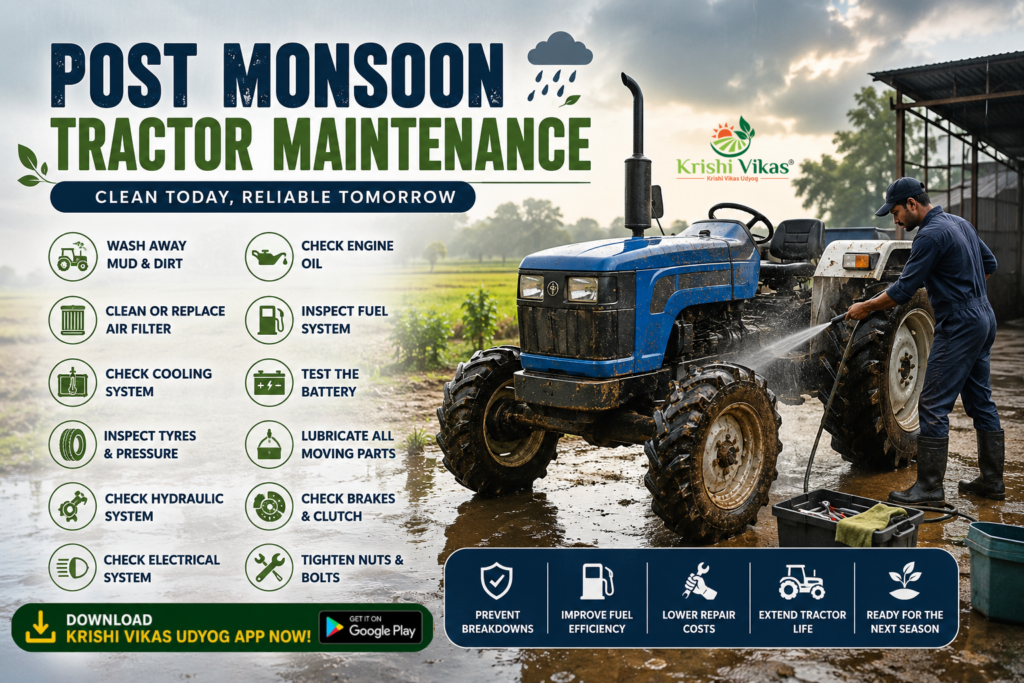
Post-Monsoon Tractor Maintenance Checklist
| Maintenance Task | Done |
| Wash the tractor thoroughly | ✔ |
| Remove mud from the undercarriage | ✔ |
| Inspect for rust | ✔ |
| Change engine oil (if due) | ✔ |
| Clean or replace the air filter | ✔ |
| Check the fuel system | ✔ |
| Inspect the cooling system | ✔ |
| Test the battery | ✔ |
| Check tyre condition and pressure | ✔ |
| Lubricate all grease points | ✔ |
| Inspect the hydraulic system | ✔ |
| Test the brakes and clutch | ✔ |
| Check electrical components | ✔ |
| Tighten loose nuts and bolts | ✔ |
| Inspect belts and hoses | ✔ |
| Store the tractor properly | ✔ |
Conclusion
A tractor works hard throughout the monsoon, so it deserves proper care once the rains begin to settle. Taking the time to clean it, inspect key components, change fluids when needed, and fix small issues early can make a big difference to its performance and reliability. Post Monsoon Tractor Maintenance.
Regular post-monsoon maintenance not only helps your tractor run more efficiently but also extends its lifespan and reduces unexpected repair costs. By following this simple July–August maintenance checklist, you can keep your machine in excellent condition and ensure it’s always ready for the next farming task.
Frequently Asked Questions (FAQs)
1. Why is post-monsoon tractor maintenance important?
Post-monsoon tractor maintenance helps remove mud, moisture, and debris that accumulate during rainy-season operations. Regular maintenance prevents rust, improves engine performance, reduces the risk of breakdowns, and extends the overall lifespan of the tractor.
2. How often should I service my tractor during the monsoon season?
If your tractor is used daily during the monsoon, it is a good idea to perform a basic inspection after every use and schedule a complete service according to the manufacturer’s recommended service intervals. Regular cleaning and lubrication are especially important during this season.
3. Can rainwater damage a tractor?
Modern tractors are designed to operate in wet conditions, but prolonged exposure to rainwater and standing moisture can lead to rust, corrosion, electrical issues, and contamination of the fuel or lubrication system. Proper cleaning and storage help minimise these risks.
4. Should I change the engine oil after the monsoon?
If your tractor has reached its recommended service hours or the engine oil appears dirty or contaminated, it is advisable to replace both the engine oil and the oil filter. Fresh oil ensures better lubrication, smoother engine performance, and improved fuel efficiency.
5. How do I prevent rust on my tractor after the rainy season?
Wash the tractor thoroughly to remove mud, dry it completely, inspect metal surfaces for early signs of rust, apply anti-rust spray or paint where necessary, and grease exposed moving parts. Storing the tractor under a covered shed also helps prevent corrosion.
6. What parts of a tractor should be checked after working in muddy fields?
After operating in muddy conditions, inspect the tyres, undercarriage, chassis, hydraulic system, air filter, radiator, brakes, clutch, battery, electrical wiring, belts, hoses, and all lubrication points. Cleaning these components thoroughly helps maintain reliable performance.
7. Does cleaning the air filter improve fuel efficiency?
Yes. A clean air filter allows sufficient airflow into the engine, resulting in more efficient combustion. This improves engine performance, reduces fuel consumption, and helps maintain the tractor’s power output.
8. What is the best way to store a tractor after the monsoon?
Park the tractor on a dry, level surface under a covered shed whenever possible. If indoor storage is unavailable, use a breathable waterproof cover, avoid parking in standing water, and disconnect the battery if the tractor will remain unused for an extended period.
9. How can I tell if my tractor’s battery has been affected by moisture?
Signs of moisture-related battery problems include corrosion on the terminals, slow engine cranking, dim lights, or difficulty starting the tractor. Cleaning the terminals, checking cable connections, and testing the battery regularly can help prevent unexpected failures.
10. Can regular post-monsoon maintenance increase a tractor’s resale value?
Yes. A well-maintained tractor generally has better performance, fewer mechanical problems, and a documented service history, making it more attractive to buyers and helping it retain a higher resale value.