Tractor Financing on EMI
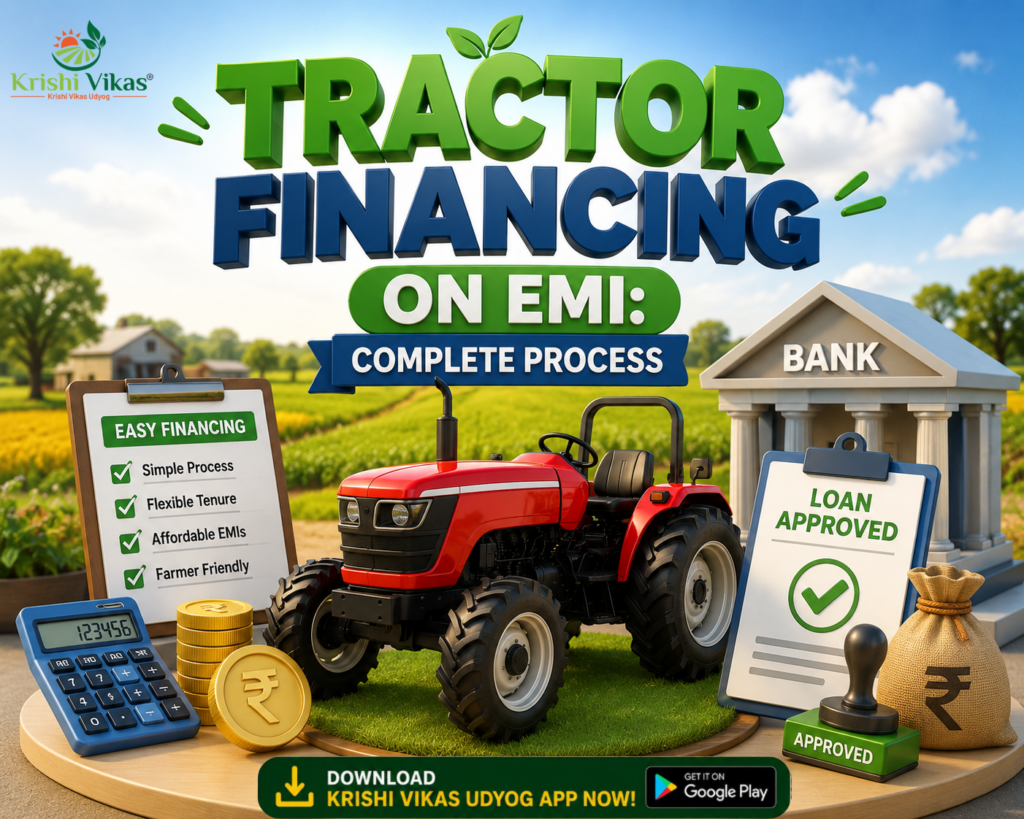
For many farmers, buying a tractor is an important investment. A tractor can save time, reduce dependence on hired machines, and make everyday farm work much easier. But there is one challenge: buying a tractor requires a lot of money. Not every farmer wants to use all their savings for a tractor. There are also seeds, fertilisers, diesel, labour, irrigation, crop expenses, and household needs to be taken care of. This is where tractor financing on EMI can help. With tractor financing, you don’t necessarily have to pay the full tractor price at one time. You need to make a down payment, finance the remaining amount through a loan, and repay that loan in monthly instalments. Tractor financing is basically a loan taken to purchase a tractor. Tractor Financing on EMI: Complete Process.
Let’s say you have selected a tractor costing ₹8 lakh. Instead of paying the entire ₹8 lakh yourself, you may pay part of the amount as a down payment and finance the remaining amount through a bank or other financing provider. You then repay the borrowed amount, along with interest, through EMIs over a fixed period. The exact down payment, interest rate, loan amount, and repayment period depend on the lender and your eligibility.
A tractor is useful throughout the farming season, but paying its entire cost upfront can put pressure on your finances. Suppose you spend most of your savings on the tractor. You may then have less money available when you need to purchase seeds or fertilisers, pay labourers, buy diesel, or deal with an unexpected farm expense. Financing can help spread the cost over a longer period. Tractor Financing on EMI: Complete Process.
Some of the main reasons farmers consider tractor loans are:
- Less pressure to pay the full price upfront
- Monthly repayment through EMIs
- More money left for regular farming expenses
- Opportunity to buy a tractor when it is needed
- Different loan and repayment options depending on the lender
How Is Tractor EMI Decided?
Three things mainly affect your EMI:
Loan amount + interest rate + loan tenure
For example, if you borrow ₹6 lakh, the EMI will depend on the interest rate and the loan tenure for which you borrow the loan. A longer tenure can make the monthly payment easier to manage, but you could end up paying more interest over the entire loan period.
New Tractor or Used Tractor on EMI?
Choosing between a new tractor and a used tractor on EMI depends mainly on your budget, farming workload, and long-term requirements. A new tractor generally comes with the latest technology, manufacturer warranty, and a wider choice of models and specifications. It may also offer greater reliability and decrease immediate repair expenses, although the initial purchase price is usually higher. Tractor Financing on EMI: Complete Process.
A used tractor, on the other hand, can be a practical choice for farmers looking to reduce their upfront investment. Since the purchase price is generally lower, the loan amount and EMI may also be lower. However, the tractor’s age and condition become very important. Before buying, check the engine, transmission, hydraulics, PTO, tyres, electrical system, hour meter, service history, and maintenance records. A professional inspection can help identify expensive problems that may not be visible during a short test drive. Tractor Financing on EMI: Complete Process.
Financing availability can also differ. Lenders may consider the tractor’s age, valuation, condition, applicant’s repayment capacity, and documentation when evaluating a used-tractor loan. New tractor financing may offer more straightforward options depending on the lender and dealership.
Before making a decision, don’t compare only the EMI. Look at the total loan repayment, interest, down payment, insurance, maintenance, repair costs, warranty, and expected working life of the tractor. For farmers who want reliability and the latest features, a new tractor may be the better choice. For those with a tighter budget and access to a well-maintained tractor, a used tractor can offer good value. Tractor Financing on EMI: Complete Process. Also read New Tractor vs Used Tractor blog at Krishi Vikas.com.
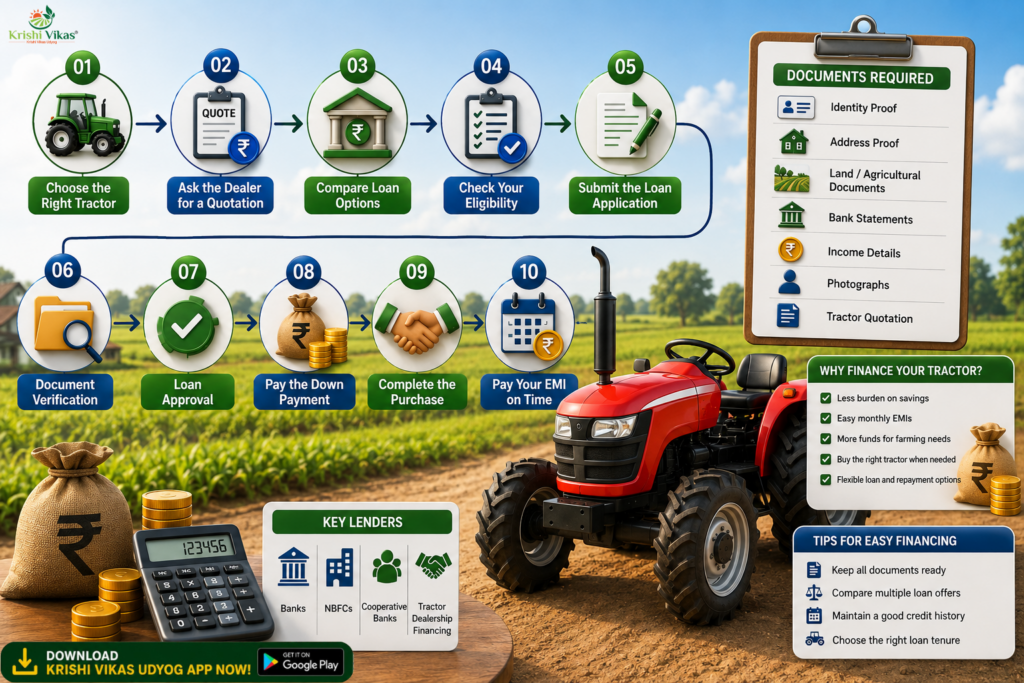
Documents Required for Tractor Financing
Identity Proof
You may need documents such as:
- Aadhaar Card
- PAN Card
- Voter ID
- Driving Licence
- Passport
Address Proof
The lender may also ask for proof of your address, such as:
- Aadhaar Card
- Voter ID
- Electricity bill
- Ration card
- Passport
- Other accepted documents
Land or Agricultural Documents
Since tractor loans are commonly linked to agricultural activities, land or farming records may be required.
Depending on your state and lender, these could include:
- Land ownership documents
- Land records
- Khasra or Khatauni
- Cultivation records
- Other agricultural documents
Bank Statements
Your bank statements may be checked to understand your financial activity and repayment capacity.
Income Details
You may need to provide information about your agricultural income, depending on the lender’s requirements.
Photographs
Some lenders also ask for recent passport-size photographs.
Tractor Quotation
Once you’ve chosen a tractor, the dealer can provide a quotation showing the model, price, taxes, and other applicable charges. There is no universal document listing for every tractor loan. The lender may ask for additional documents based on your profile and loan amount.
How to Get a Tractor Loan on EMI?
Step 1: Choose the Right Tractor
Before thinking about EMI, think about the tractor you actually need. Your farm size, soil, crops, implements, transportation requirements, and workload should all be considered. The right tractor isn’t necessarily the biggest or most powerful one. It is the one that can comfortably handle your work without unnecessarily increasing your purchase and running costs.
Step 2: Ask the Dealer for a Quotation
After selecting a tractor, ask the dealer for a detailed quotation. Ask about the complete amount you will need to pay, including applicable taxes, insurance, registration, accessories, and other charges. This helps you understand how much you need to arrange yourself and how much you may need to finance.
Step 3: Compare Loan Options
You may have more than one financing option, so compare them rather than accepting the first offer. The lowest EMI isn’t always the cheapest loan. A longer repayment period may make your EMI smaller but could mean paying more interest over the entire loan.
Check the Details like –
- Interest rate
- Down payment
- EMI
- Loan tenure
- Processing charges
- Prepayment conditions
- Late-payment charges
- Other applicable fees
Step 4: Check Your Eligibility
Eligibility depends on the lender, but tractor loans are generally available to eligible farmers. Your income, land details, bank transactions, existing loans, credit history, and other financial information may be considered.
When you apply, the lender may look at things such as:
- Your age
- Farming or agricultural income
- Land ownership or cultivation details
- Existing loans
- Credit history
- Bank account activity
- Repayment capacity
- Tractor price and model
- Down payment you can make
Step 5: Submit the Loan Application
Once you’ve chosen the financing option, submit the application along with the required documents. In many cases, the tractor dealer can help you with financing representatives, making the application process easier.
Step 6: Document Verification
The lender will check the information and documents you have submitted. They may verify your identity, address, land records, bank details, income, and other information. If anything is missing, they may ask you to submit additional documents.
Step 7: Loan Approval
If everything is satisfactory, the lender may approve the loan. Before accepting it, take a few minutes to read the loan terms carefully. Check the interest rate, EMI, tenure, processing charges, repayment schedule, and any other conditions. If something isn’t clear, ask the lender before signing.
Step 8: Pay the Down Payment
You may need to pay your share of the tractor price as a down payment. The lender then finances the eligible remaining amount. The required down payment can vary depending on the lender, tractor, loan scheme, and applicant profile.
Step 9: Complete the Purchase
After the required loan formalities are completed and the financing is disbursed according to the lender’s process, you can complete the tractor purchase.
Step 10: Pay Your EMI on Time
Once your loan begins, your EMI payments will follow the agreed schedule. Keep track of your due dates and make payments on time. Missing payments can result in additional charges and may affect your credit history.
Tips to Make Tractor Financing Easier
- Keep Your Documents Ready – Don’t wait until the last minute to arrange your paperwork. Keep your Aadhaar, PAN, bank documents, land records, photographs, and other required documents ready.
- Compare Financing Options – Check different loan offers if possible. Look beyond the interest rate and compare processing charges, tenure, EMI, prepayment rules, and total repayment.
- Keep Your Credit History Healthy – If you already have loans, try to make your payments on time. A good repayment record can be helpful when applying for new financing.
- Don’t Buy a Bigger Tractor Than You Need – More horsepower doesn’t automatically mean a better tractor. Choose a model based on your farm work and the implements you actually plan to use. A big tractor that is unnecessarily expensive can increase both your loan burden and running costs.
- Ask Questions Before Signing – If you don’t understand something in the loan agreement, ask about interest rate, EMI amount, loan tenure, processing fee, insurance requirements, late-payment charges, repayment rules.
Mistakes Farmers Should Avoid When Taking a Tractor Loan
- Missing EMI Dates – Late payments can result in additional charges and may affect your credit record.
- Choosing Only Based on EMI – A low EMI may sound attractive, but a longer tenure can increase the total interest you pay.
- Forgetting About Extra Charges – Ask about processing fees, documentation charges, insurance, late-payment penalties, and other applicable costs.
- Taking a Bigger Loan Than Necessary – A bigger loan means more repayment. Choose a tractor and financing amount that match your actual farming requirements.
- Signing Without Reading – Never sign the loan agreement without understanding the important terms.
Final Thoughts
A tractor can become one of the most useful machines on a farm, but buying one should not put unnecessary pressure on your finances. If you’re planning to buy a tractor on EMI, take some time to compare your options. Check the tractor’s total price, decide how much you can comfortably pay upfront, compare financing offers, and understand the complete repayment cost. Most importantly, don’t choose a tractor or loan simply because the EMI looks affordable. Choose a tractor that matches your actual farming needs and a loan that you can comfortably repay through your farming income. With the right planning, tractor financing can help you bring home the machine you need while keeping your farm budget under control.
If you have enough savings, a reasonable down payment can reduce the amount you borrow. However, make sure you still have enough money for farming and emergency needs. You can also compare lenders to find a financing option with suitable terms. Choosing the right loan tenure matters too. A shorter tenure may increase your monthly EMI but can reduce the total interest, while a longer tenure may reduce the EMI but increase the overall interest cost. If you have extra money later, you can ask your lender about a partial prepayment or early loan closure. Check whether any charges or conditions apply before doing so. Tractor Financing on EMI: Complete Process
Frequently Asked Questions About Tractor Financing on EMI
1. Can I buy a tractor on EMI?
Yes. Eligible farmers can purchase a tractor through financing from banks, NBFCs, and other lending institutions. You generally pay a down payment and repay the financed amount through EMIs.
2. What documents are required for tractor financing?
Common documents include Aadhaar Card, PAN Card, address proof, bank statements, land or agricultural records, photographs, and the tractor quotation. The exact requirements can vary from one lender to another.
3. How much down payment is required for a tractor loan?
The down payment depends on the tractor price, lender’s policy, loan scheme, and your eligibility. Some applicants may need to contribute a certain portion of the tractor’s cost upfront.
4. Can I get tractor financing without a large down payment?
It depends on the lender and your eligibility. Financing terms can vary based on your income, credit history, agricultural records, tractor model, and repayment capacity.
5. Can farmers with existing loans apply for tractor financing?
Yes, they may be able to apply. However, the lender will usually consider your existing loan obligations, income, credit history, and overall ability to repay the new loan.
6. Can I finance a second-hand tractor?
Some lenders offer loans for used tractors. However, the tractor’s age, condition, valuation, documentation, and the lender’s policies can affect eligibility and financing terms.
7. How is tractor EMI calculated?
The EMI mainly depends on the loan amount, interest rate, and repayment tenure. A larger loan generally means a higher EMI, while a longer tenure may reduce the monthly EMI but increase the total interest paid.
8. Is a good credit score necessary for a tractor loan?
Credit history can be an important part of the lender’s assessment. However, loan eligibility isn’t based on one factor. Income, land details, existing liabilities, banking history, and repayment capacity may also be considered.
9. How long does it take to get tractor loan approval?
The processing time varies between lenders. It can depend on your documents, eligibility verification, loan amount, and other formalities. Keeping all required documents ready can help make the process smoother.
10. Can I repay my tractor loan early?
Some lenders may allow part-prepayment or early repayment, but conditions and applicable charges can vary. Check the loan agreement or ask the lender before making an early repayment.
11. Is it better to choose a shorter or longer tractor loan tenure?
It depends on your financial situation. A shorter tenure may result in higher EMIs but potentially lower total interest. A longer tenure can make monthly payments easier but may increase the overall interest cost.
12. Can I apply for tractor financing through a tractor dealer?
In many cases, tractor dealers can help customers connect with financing representatives or lenders. However, the final loan approval and terms are determined by the financing institution.
13. What happens if I miss a tractor loan EMI?
Missing an EMI can lead to late-payment charges and may affect your credit history. If you think you may have difficulty making a payment, contact your lender as soon as possible to understand your available options.
14. Should I choose the tractor first or the loan first?
It is usually better to first identify a tractor that suits your farming needs and budget. Once you know the tractor’s total cost, you can compare financing options and decide how much you can comfortably borrow.
15. How can I reduce the total cost of tractor financing?
You can compare lenders, make a reasonable down payment if affordable, choose a suitable loan tenure, avoid unnecessary borrowing, and make repayments on time. Always compare the total repayment amount, not just the monthly EMI.