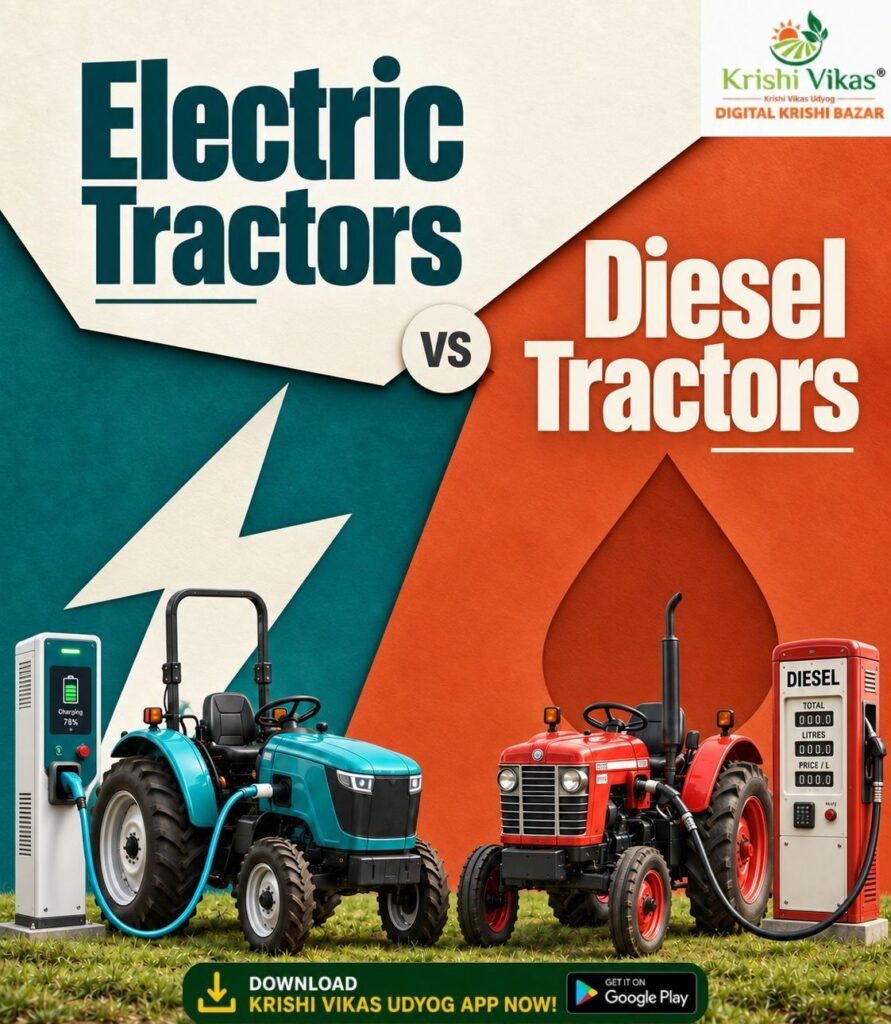
A tractor may look like a single machine, but underneath the hood, it is a carefully engineered combination of mechanical, hydraulic, electrical and structural systems. From the engine and clutch to the transmission, differential, axles, PTO and hydraulic system, every component has a specific role. More importantly, these components must work together to deliver power, traction, stability and reliability in demanding agricultural conditions. Also read the Electric Tractors vs Diesel Tractors blog at Krishi Vikas.com.
What Is Tractor Engineering?
Tractor engineering is the design and integration of systems that allow a tractor to generate power, transfer that power to the wheels and PTO, operate agricultural implements and withstand demanding working conditions.
Unlike passenger vehicles, tractors frequently operate at low speeds while producing high pulling force. They also need to handle varying soil conditions, heavy implements, long working hours and uneven terrain.
This makes tractor design a balance between engine power, torque and power transmission, traction, weight distribution, hydraulic performance, structural strength, fuel efficiency, operator comfort, reliability and serviceability.
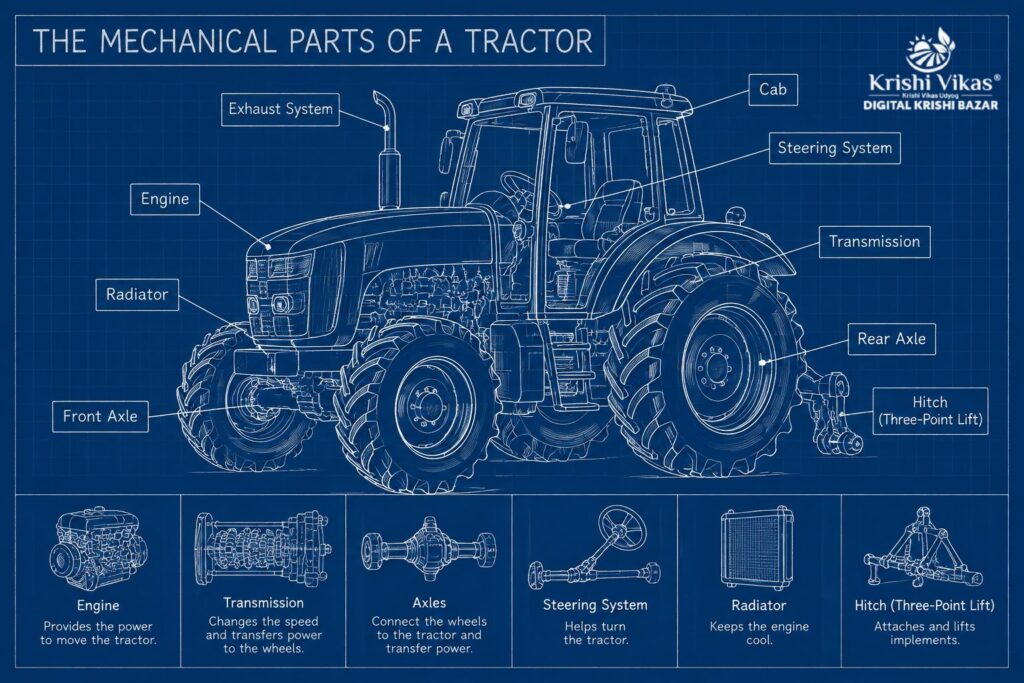
Major Mechanical Parts of a Tractor
1. Engine
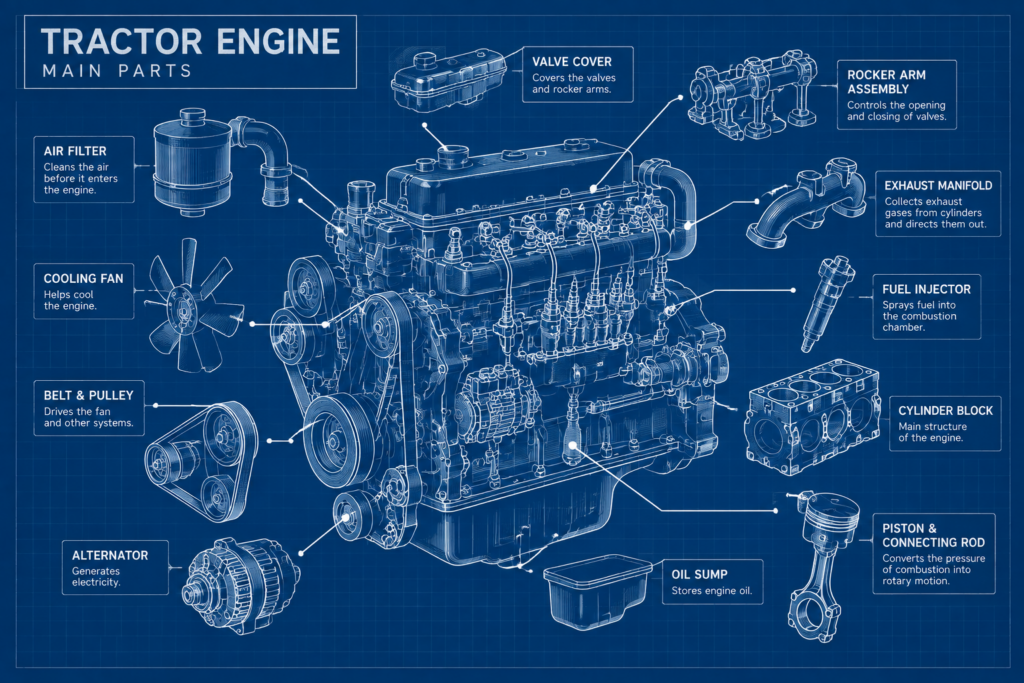
The engine is the primary power source of a conventional tractor. Most agricultural tractors use diesel engines because diesel powertrains are well suited to high-load, low-speed applications. The engine converts the chemical energy in fuel into mechanical power.
The major engine components include the cylinder block, cylinder head, pistons, connecting rods, crankshaft, camshaft, valves, fuel-injection system, flywheel, lubrication system and cooling system. The engine’s power and torque characteristics influence the tractor’s ability to pull implements, operate the PTO and work efficiently under load.
2. Clutch
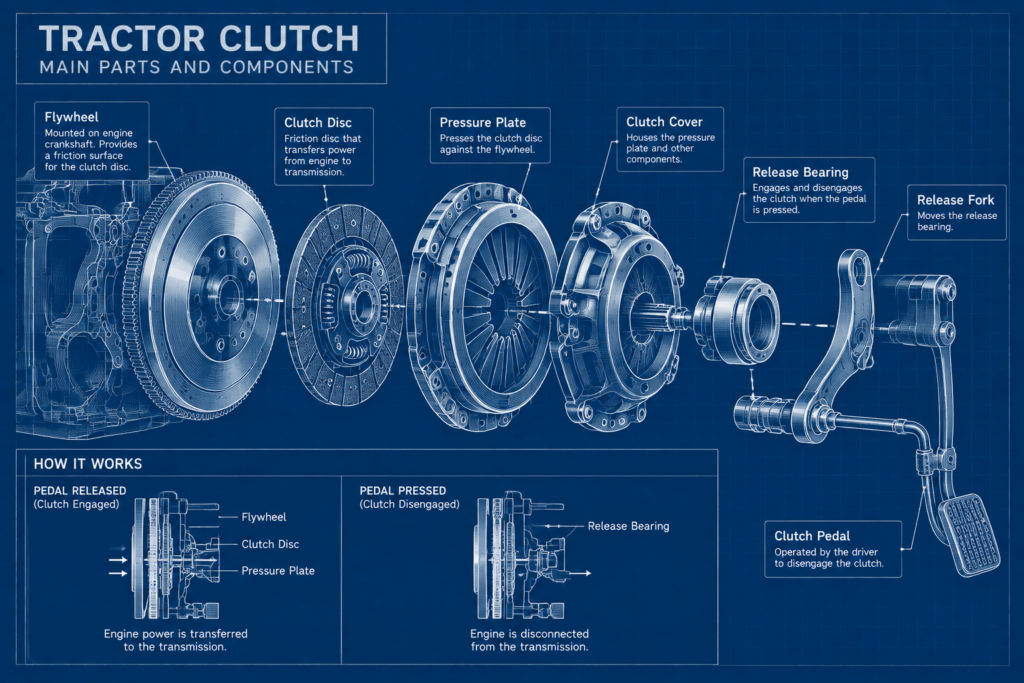
The clutch connects and disconnects engine power from the transmission. When the tractor starts or changes gears, the clutch allows the transmission to be temporarily separated from the engine. A typical clutch system consists of the clutch disc, pressure plate, flywheel, release bearing and clutch mechanism. In agricultural tractors, clutch durability is particularly important because tractors frequently operate under varying loads.
3. Transmission
The transmission controls how engine power is converted into useful speed and torque at the wheels. The engine may operate efficiently within a particular speed range, while agricultural operations require different ground speeds.
The transmission therefore provides different gear ratios. A higher gear generally provides higher speed with lower wheel torque, while a lower gear provides lower speed with higher wheel torque.
Depending on the tractor, transmissions can include different numbers of forward and reverse gears, synchronized arrangements, constant-mesh systems, powershift options or other configurations. Transmission design directly influences field performance, road speed, fuel efficiency, traction and operator convenience.
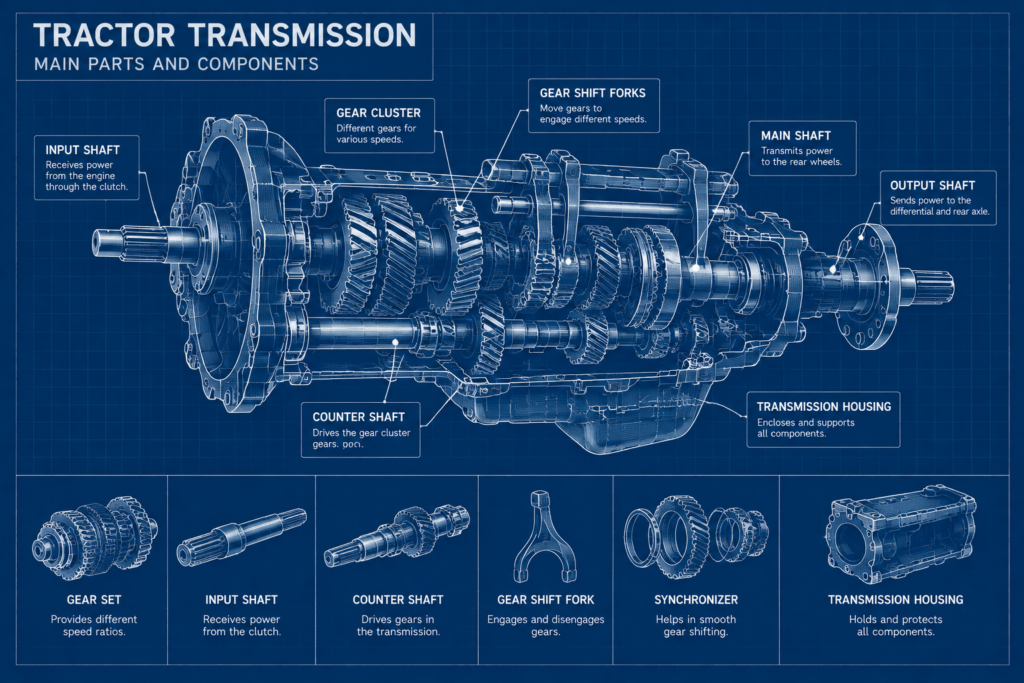
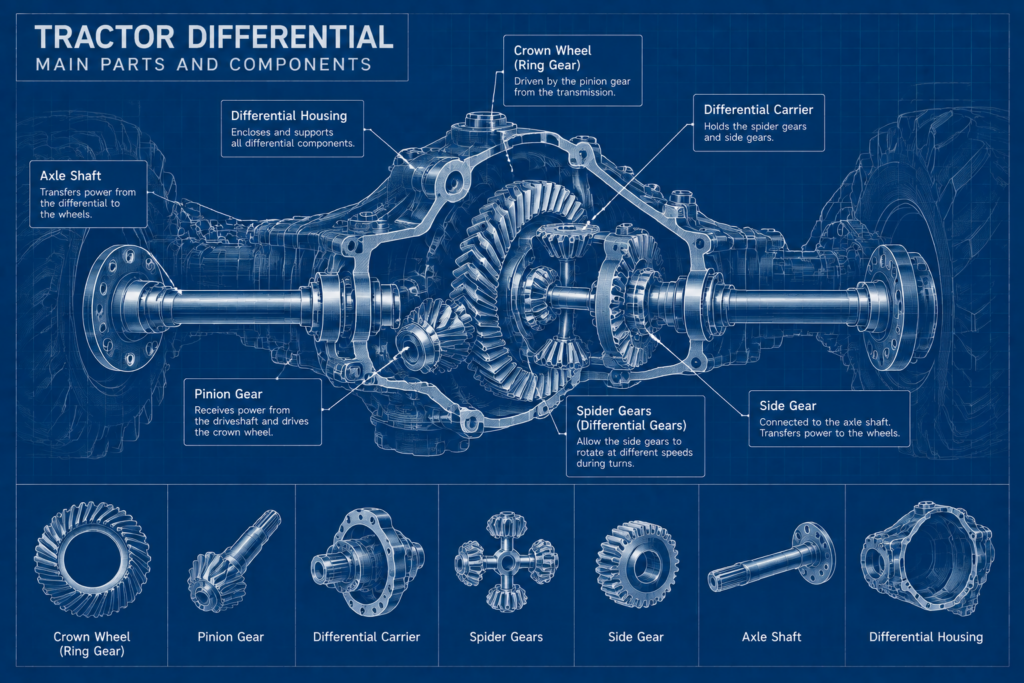
4. Differential
The differential is an important part of the tractor’s final-drive system. When a tractor turns, its inside and outside wheels travel different distances. The differential allows the wheels on the same axle to rotate at different speeds. Without this function, turning would create unnecessary tyre slip and mechanical stress. Many tractors also use a differential lock. When additional traction is required, the differential lock can help provide more uniform drive to the wheels, particularly in conditions where one wheel may lose traction.
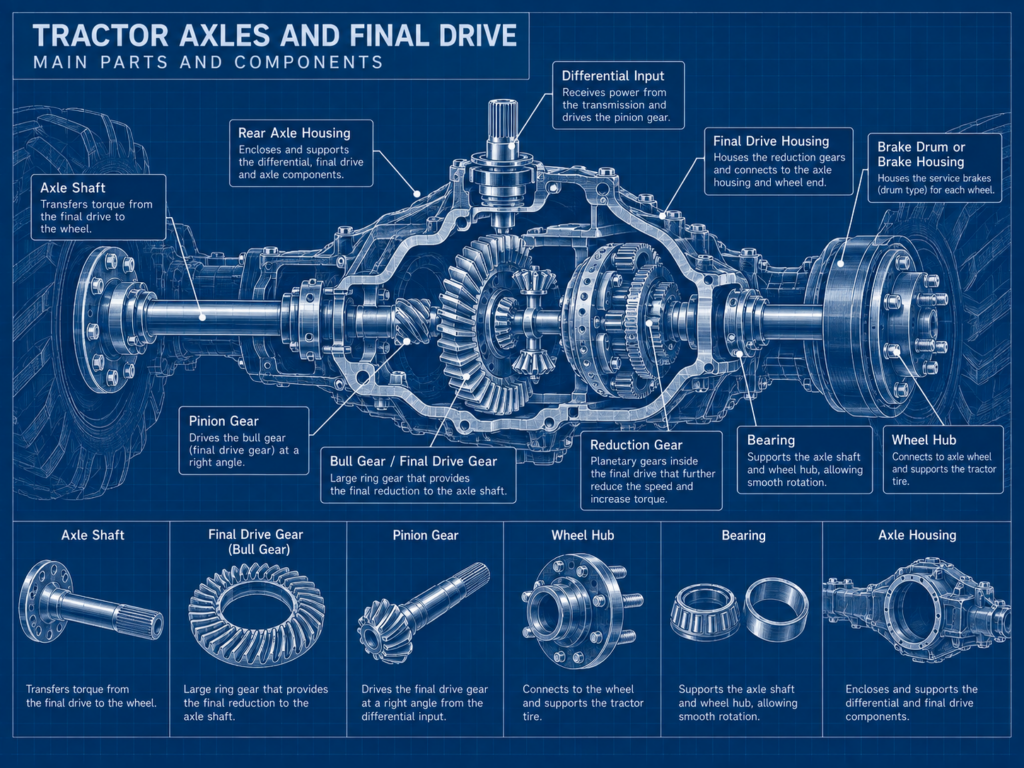
5. Axles and Final Drive
The axles transfer power from the differential and final-drive system to the wheels while supporting the tractor’s weight. Tractors may use 2WD or 4WD configurations, with different front axle designs depending on the application. The final drive reduces rotational speed while increasing torque delivered to the wheels. This is particularly important because agricultural tractors require substantial wheel torque for pulling heavy implements and working in difficult soil.
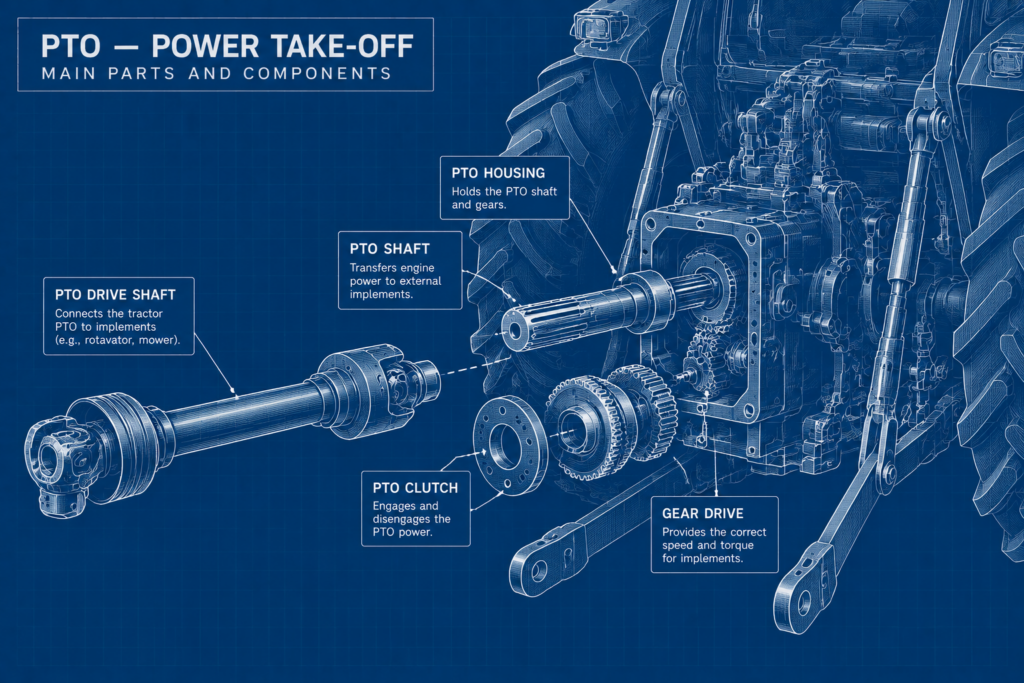
6. PTO — Power Take-Off
The Power Take-Off, commonly known as PTO, allows the tractor to transfer mechanical power to an implement. Instead of relying only on tractor movement, PTO-driven implements can use the engine’s mechanical power to perform work. Rotavators, rotary slashers, mowers, sprayers, threshers and certain harvesting equipment can use PTO power. PTO engineering involves factors such as rotational speed, torque capacity, engagement mechanism and compatibility with implements. The PTO therefore extends the tractor’s role beyond simply pulling equipment.
7. Hydraulic System
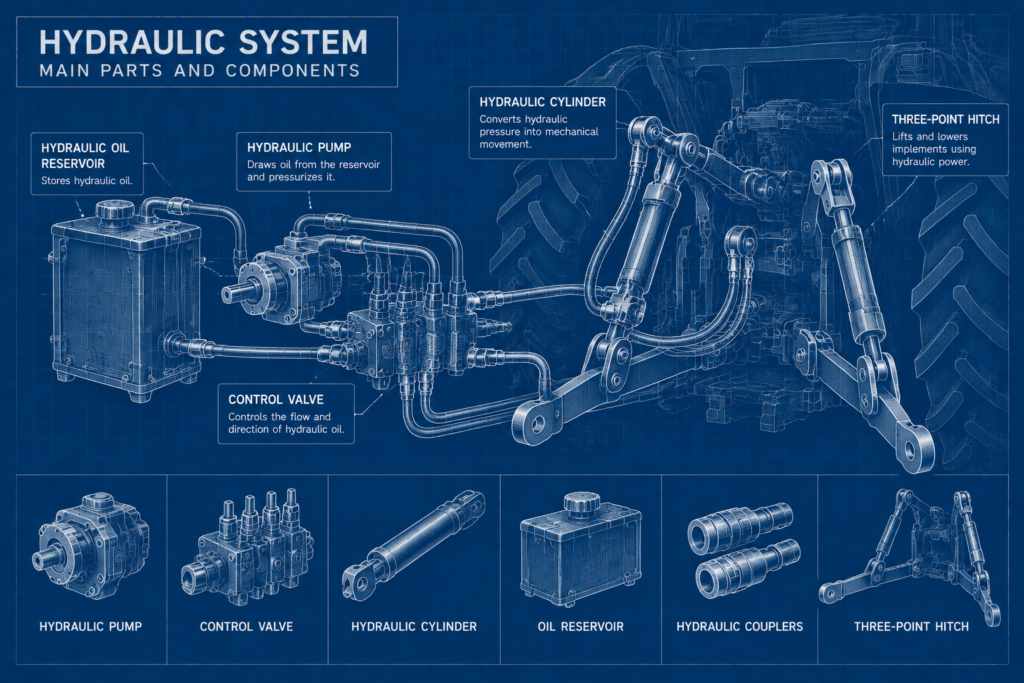
The hydraulic system is one of the most important systems in a modern tractor. It uses pressurized hydraulic fluid to perform work. The main components include the hydraulic pump, hydraulic reservoir, control valves, hydraulic cylinders, pipes, hoses and three-point linkage. Hydraulics enable the tractor to lift, lower and control mounted implements. Depending on the tractor configuration, the hydraulic system can also support remote-cylinder operation and other implement-related functions.
8. Three-Point Linkage
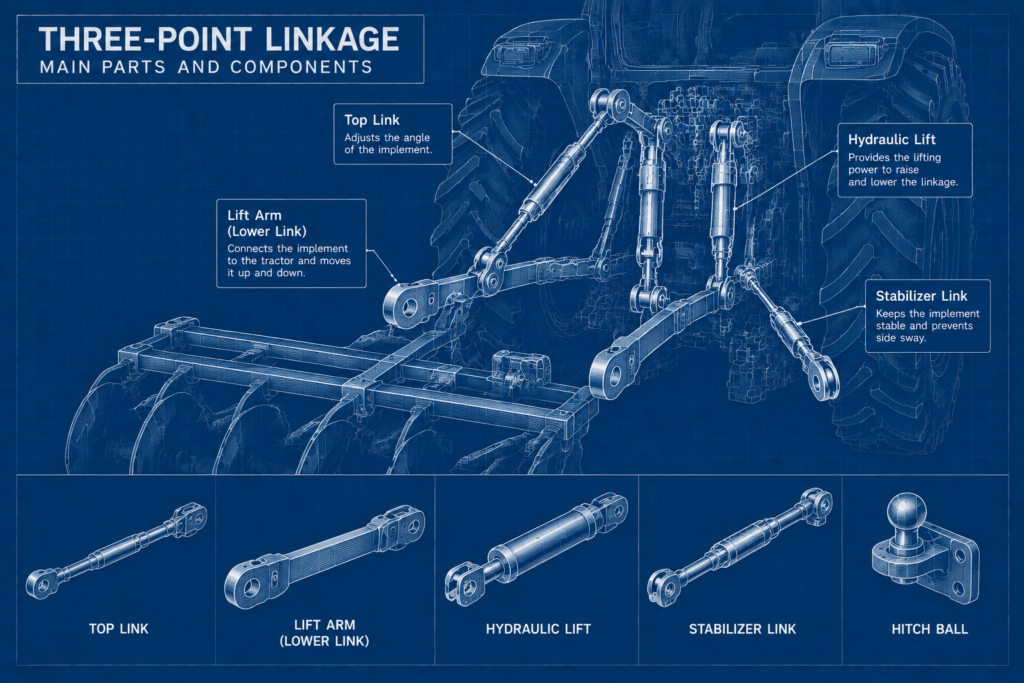
The three-point linkage connects mounted implements to the tractor. It generally consists of two lower links, a top link, lift arms and a hydraulic lifting mechanism. The three-point system allows implements to be raised, lowered and positioned relative to the tractor. Its geometry is important because it affects lift capacity, implement stability, weight transfer, working depth and tractor-implement interaction.
9. Steering System
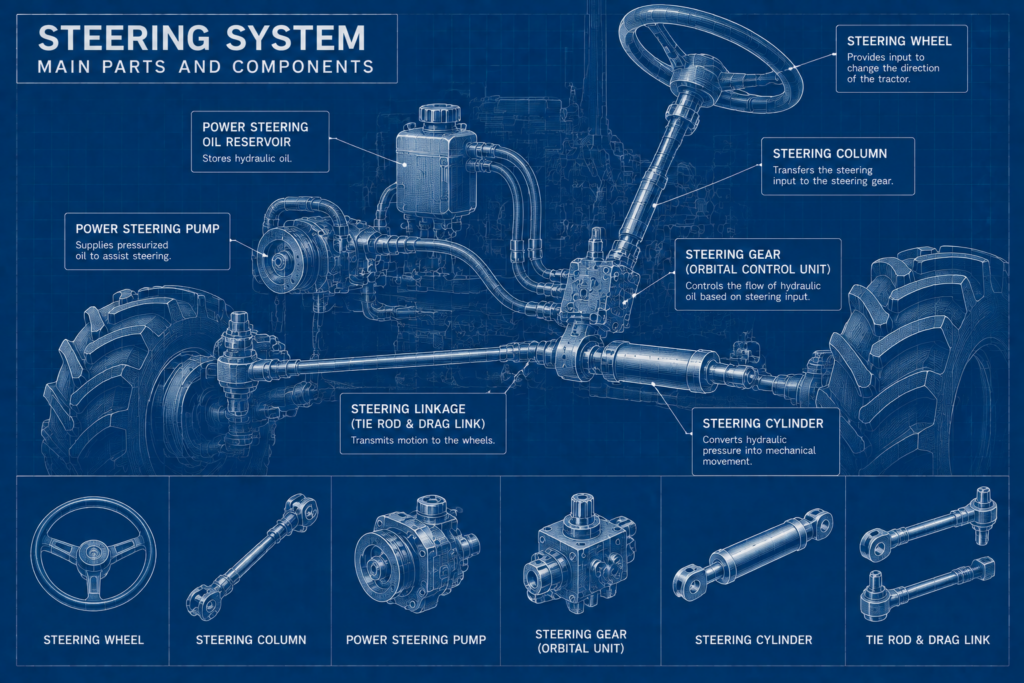
The steering system controls the direction of the tractor. Modern tractors commonly use hydraulic or hydrostatic assistance to reduce steering effort. Depending on the design, the steering system can include the steering wheel, steering column, steering gear, hydraulic steering components, tie rods, steering arms and front axle steering mechanism. A tractor’s steering system needs to remain responsive even when the machine is carrying or pulling heavy loads.
10. Braking System
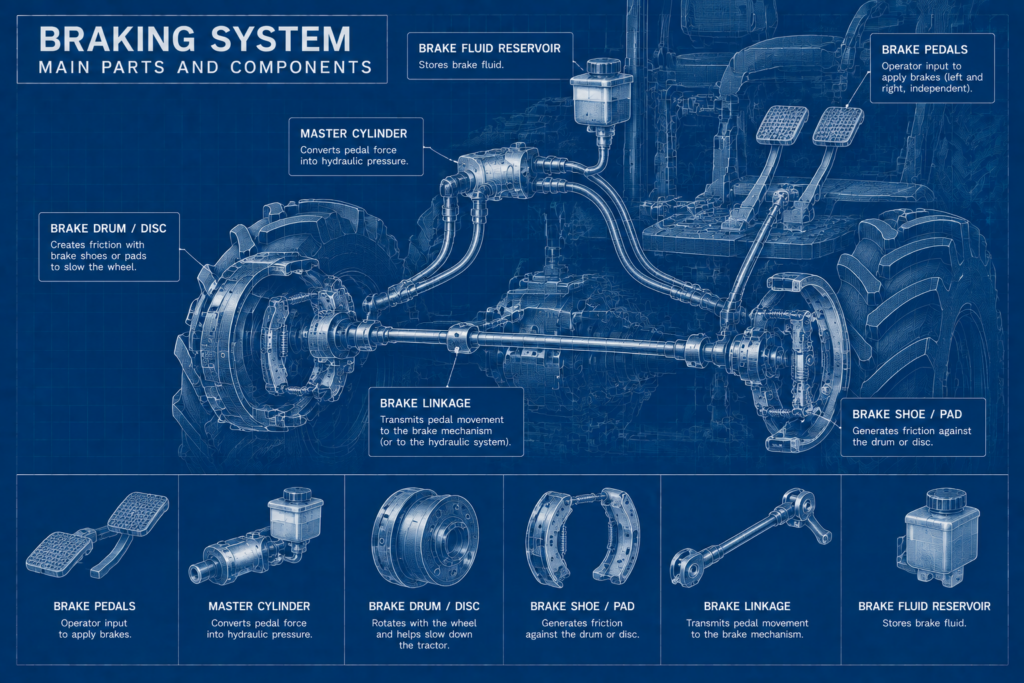
The braking system is designed to control and stop the tractor safely. Common components include brake discs or drums, brake actuators, brake pedals and mechanical or hydraulic linkages. Many tractors use separate left and right brake pedals, which can assist with maneuvering in certain field conditions when used appropriately. Braking performance becomes particularly important when the tractor is transporting heavy trailers or operating on slopes.
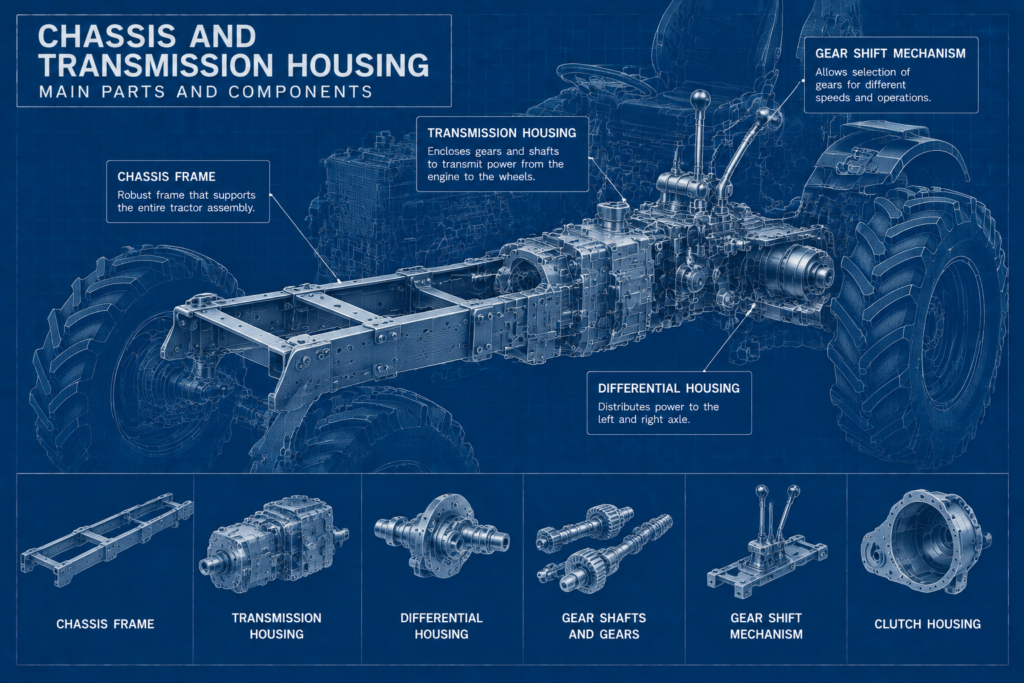
11. Chassis and Transmission Housing
The chassis and structural housing provide the foundation for mounting and supporting major tractor systems. Unlike a passenger car, tractor structures must withstand high drawbar loads, heavy implement loads, engine vibration, shock loads and uneven terrain. The structural design therefore has to balance strength, weight and manufacturability.
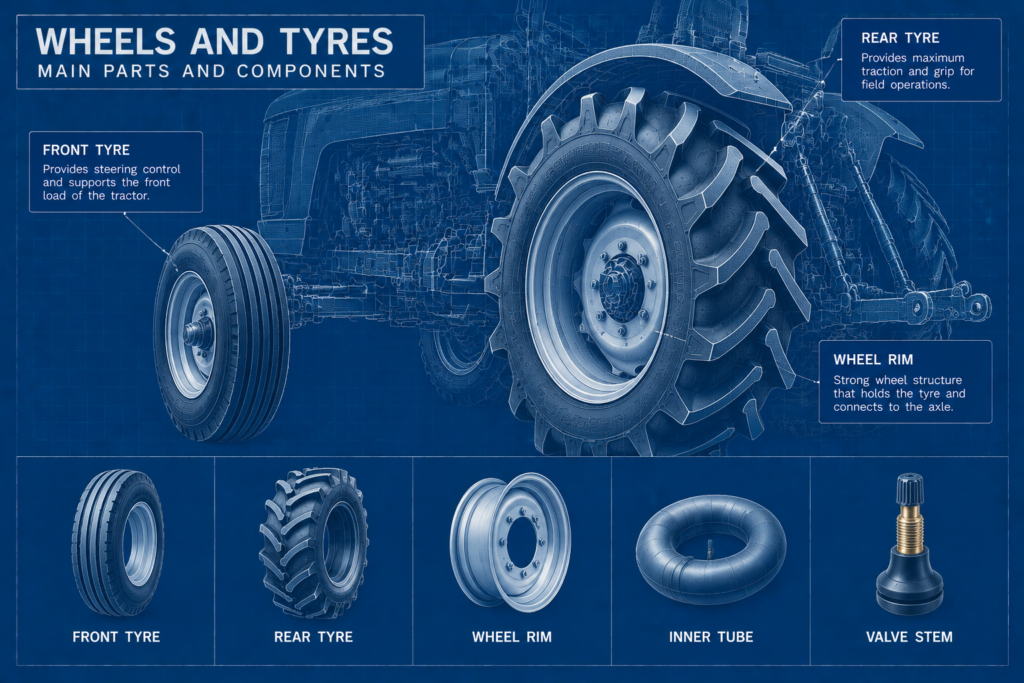
12. Wheels and Tyres
Wheels and tyres are the final connection between the tractor and the ground. They have a major influence on traction, wheel slip, fuel consumption, ride comfort, soil compaction and stability. Agricultural tractor tyres are designed with tread patterns suitable for transferring traction to soil. Tyre selection also depends on the tractor’s application, soil conditions and whether the tractor is primarily being used in fields or on roads.
How These Parts Work Together
The most important point in tractor engineering is that these components do not work independently.
The primary mechanical power flow can be understood as:
Engine → Clutch → Transmission → Differential → Final Drive → Axles → Wheels
At the same time, engine power can be transferred through:
Engine → PTO → Implement
The hydraulic power flow works through:
Engine → Hydraulic Pump → Hydraulic System → Three-Point Linkage/Implements
All these systems have to work together.
For example, increasing engine power may require changes to the transmission, cooling system, clutch, axles and structural components. Similarly, increasing hydraulic lift capacity can influence the rear structure, axle loads, stability and implement compatibility.
Mechanical Parts and Their Functions
| Mechanical Part/System | Primary Function |
| Engine | Generates mechanical power |
| Clutch | Connects and disconnects engine power |
| Transmission | Controls speed and torque |
| Differential | Allows different wheel speeds while turning |
| Final Drive | Reduces speed and increases wheel torque |
| Axles | Transfer power and support loads |
| PTO | Transfers mechanical power to implements |
| Hydraulic Pump | Generates hydraulic flow and pressure |
| Hydraulic System | Powers and controls hydraulic functions |
| Three-Point Linkage | Connects and lifts mounted implements |
| Steering System | Controls tractor direction |
| Braking System | Slows and stops the tractor |
| Chassis/Structural Housing | Supports major components and loads |
| Wheels and Tyres | Transfer power and traction to the ground |
Why Tractor Engineering Is Different
A tractor is designed primarily to perform agricultural work, rather than simply transport people. It needs to generate high torque, maintain traction, operate agricultural implements and withstand harsh working conditions.
This creates a combination of engineering priorities: high torque, low-speed operation, traction, durability and implement compatibility.
The ideal combination depends on the tractor’s intended application. A compact tractor used in orchards may have very different engineering priorities from a high-horsepower tractor designed for heavy tillage.
Conclusion
Tractor engineering is a combination of mechanical design, power transmission, hydraulics, structural engineering and vehicle integration. The engine may generate the power, but the tractor’s actual performance depends on how effectively that power moves through the clutch, transmission, differential, axles and tyres, and how efficiently the PTO and hydraulic systems convert it into useful agricultural work.
In simple terms, the engine generates power, the transmission manages it, the axles and tyres deliver traction, the PTO powers implements, the hydraulics control implements, and the structural system holds everything together. That integration is what transforms individual mechanical components into a reliable agricultural machine.
Krishi Vikas is a Digital Krishi Bazar and we offer agricultural services like Buy/Sell/Rent tractors, harvesters, goods vehicles & agri-equipment. Please contact us for more information.
Subscribe to our Youtube Channel – https://www.youtube.com/@JoinKrishiVikas
Follow us for Latest Tractor Industry Updates!
LinkedIn – https://www.linkedin.com/company/joinkrishivikas/
Facebook – https://www.facebook.com/joinkrishivikas
Instagram – https://www.instagram.com/joinkrishivikas/
Download the Krishi Vikas App now!
Play Store – https://play.google.com/store/apps/details?id=com.krishivikas.android&pcampaignid=web_share
App Store – https://apps.apple.com/in/app/krishi-vikas-udyog-kisan-app/id6449253442