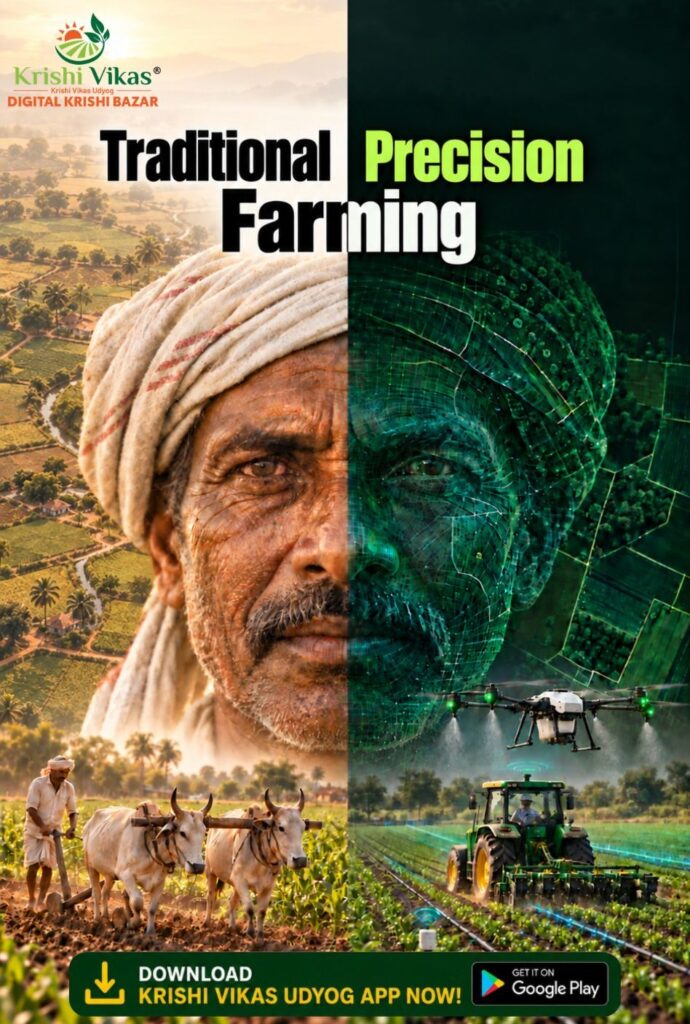
India is taking a broader approach to farm mechanisation with the National Farm Mechanisation Policy, focusing not only on tractors and farm equipment but also on custom hiring, drones, precision agriculture, machinery rental, manufacturing and technology development. Under the existing Sub-Mission on Agricultural Mechanization (SMAM), the Government is working to improve access to agricultural machinery, particularly for small and marginal farmers and regions with lower farm-power availability.
The Ministry of Agriculture & Farmers Welfare outlined these measures in a written reply in the Lok Sabha on 11 August 2026.
Also read the SMAM Scheme: Government Boosts Farm Mechanization for Farmers blog at Krishi Vikas.com.
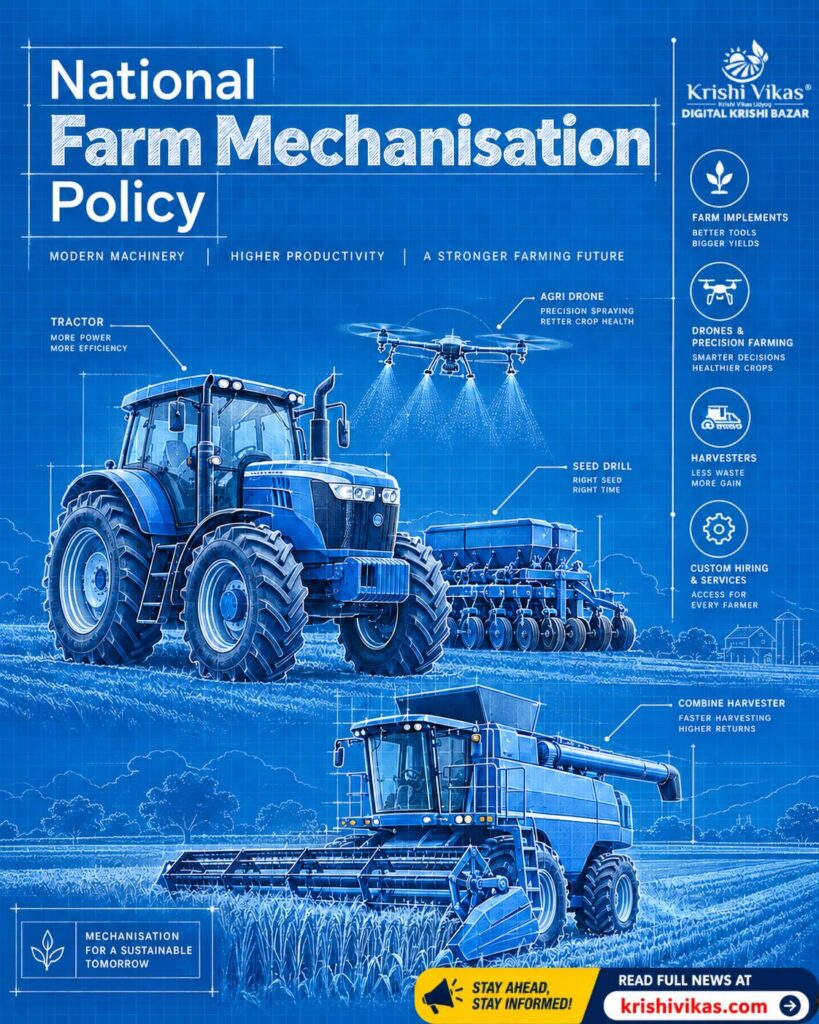
SMAM: Making Farm Machinery More Accessible
The Sub-Mission on Agricultural Mechanization (SMAM) is being implemented nationally through State Governments under the umbrella of the Rashtriya Krishi Vikas Yojana (RKVY). One of its major objectives is to make mechanisation more accessible to small and marginal farmers.
For many farmers, purchasing expensive machinery individually is difficult because of high upfront costs and relatively small landholdings. SMAM therefore combines machinery purchase assistance with shared-access models such as Custom Hiring Centres and Farm Machinery Banks. This allows farmers to access machinery without necessarily having to own every machine they use.
Custom Hiring Centres Get Financial Support
Custom Hiring Centres are an important part of India’s National Farm Mechanisation Policy. Under SMAM, CHCs receive financial assistance of 40% of the project cost, for projects costing up to ₹250 lakh. The model can help farmers hire tractors, implements and other agricultural machinery according to their seasonal requirements. For farmers cultivating smaller areas, this can provide access to mechanisation while reducing the financial burden associated with individual ownership.
Farm Machinery Banks Receive Higher Assistance
Farm Machinery Banks provide another shared machinery model. The government provides:
- 80% financial assistance for FMB projects costing up to ₹30 lakh.
- 95% assistance for FMBs in the North-Eastern States.
The higher assistance for the Northeast reflects the government’s focus on improving machinery access in regions where farm mechanisation faces geographical and operational challenges.
Drones and Precision Agriculture Included
Farm mechanisation is increasingly moving beyond conventional tractors and implements. SMAM also encourages the adoption of:
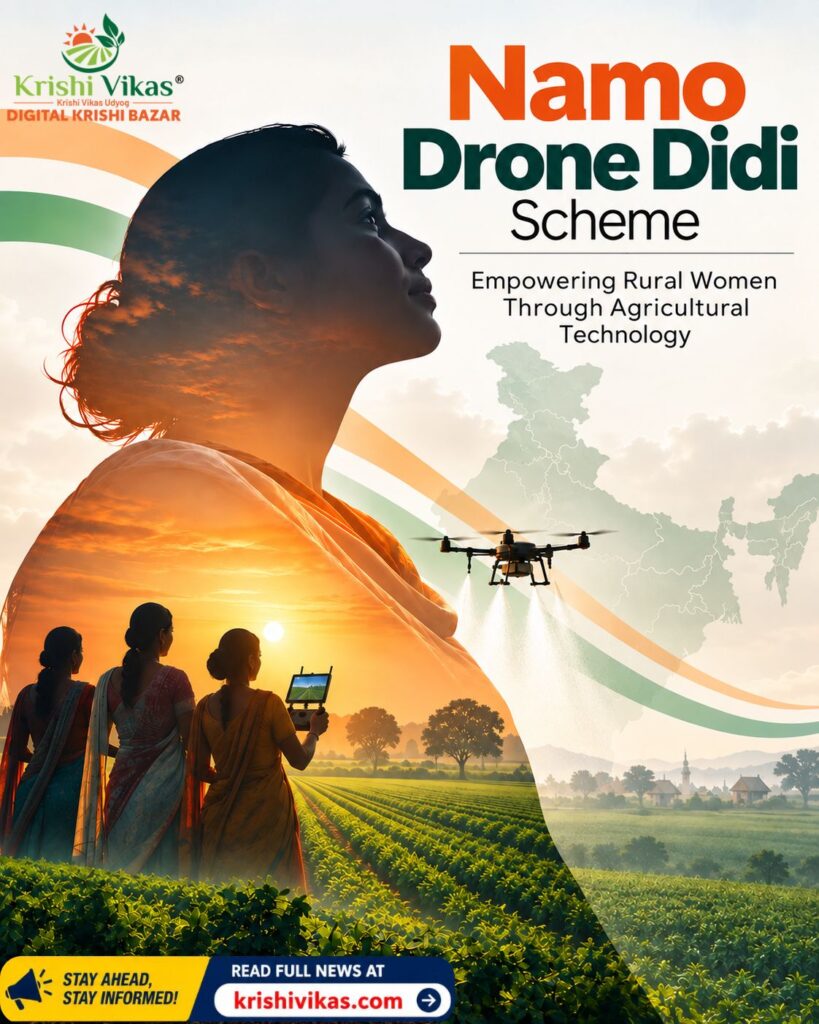
- Agricultural drones
- Precision agriculture tools
- Advanced mechanisation technologies
- Women-friendly farm implements
The policy direction indicates that India’s mechanisation strategy is expanding toward technology-enabled farming, where machines, digital tools and precision technologies work together. The scheme also supports machinery testing and certification, demonstrations, training and capacity building.
Crop Residue Management Through Machinery
The government is also using machinery-based solutions to address crop residue management. The Crop Residue Management (CRM) Scheme operates in:
- Punjab
- Haryana
- Uttar Pradesh
- Madhya Pradesh
- NCT of Delhi
The scheme supports subsidised agricultural machinery and Custom Hiring Centres to encourage better crop-residue management and reduce stubble burning. Since 2023–24, the CRM Scheme has been integrated with SMAM under RKVY with a 60:40 Centre-State funding pattern.
Horticulture Mechanisation Also Gets Support
Under the Mission for Integrated Development of Horticulture (MIDH), assistance is available for power-operated machines and tools, including plant-protection equipment. The programme also provides support for the procurement of new machines, including imported machinery where eligible. This expands mechanisation opportunities across horticultural operations, where labour-intensive activities can create significant operational challenges.
Agriculture Infrastructure Fund Can Support Machinery Infrastructure
The Agriculture Infrastructure Fund (AIF) provides financial support for eligible agricultural infrastructure projects. For projects such as Custom Hiring Centres and Farm Machinery Banks, support can include:
- Interest subvention
- Credit guarantee coverage
- Medium- to long-term debt financing
This creates another financial channel for developing shared agricultural machinery infrastructure.
Government Pushes Agricultural Machinery Manufacturing
One of the more significant aspects of the government’s National Farm Mechanisation Policy is its focus on domestic manufacturing. India permits 100% Foreign Direct Investment under the automatic route in agricultural machinery manufacturing. The objective is to encourage global Original Equipment Manufacturers (OEMs) to establish production facilities in India.
This can contribute to:
- Domestic manufacturing capacity
- Technology introduction
- Stronger agricultural machinery supply chains
- Greater private-sector participation
- Development of advanced farm machinery
The government is also encouraging domestic companies to participate in manufacturing, innovation and mechanisation services.
Opportunity for Agri Startups
The mechanisation ecosystem is also opening opportunities for agricultural startups.
Agri startups developing innovative machinery and digital mechanisation solutions can receive support through RKVY-RAFTAAR through mechanisms such as:
- Incubation
- Innovation challenges
- Funding support
This is significant as India’s machinery ecosystem expands from traditional equipment manufacturing toward automation, digital agriculture, precision farming and technology-enabled machinery services.
Machinery Rental Could Become More Important
The government is also encouraging private-sector-led mechanisation services through Custom Hiring Centres and machinery rental platforms. For farmers, this creates an alternative to outright machinery ownership. Instead of purchasing a machine that may only be required during a particular operation or season, farmers can potentially hire equipment when needed. This model is particularly relevant for small and marginal farmers and can increase machinery utilisation across farming communities.
Faster Testing and Certification for Manufacturers
The government has also stated that testing and certification procedures for agricultural machinery are being simplified. The objective is to maintain quality standards while enabling manufacturers to achieve faster market access. For machinery manufacturers, streamlined certification can help reduce delays between product development and commercial availability.
ICAR’s Role in Farm Mechanisation Research
Research and development remain another part of India’s mechanisation strategy. Agricultural mechanisation research is undertaken through the Indian Council of Agricultural Research (ICAR).
The government says its research network includes:
- 7 institutes
- 6 All India Coordinated Research Projects with 105 centres
- 2 All India Network Projects
- 4 Consortia Research Platforms
The government also reviews global technological developments and evaluates suitable innovations and practices for Indian agriculture.
What About International Technology Partnerships?
The government clarified that there is currently no specific proposal for collaborative research, technology transfer and commercialisation partnerships exclusively with South Korea or another technologically advanced country for agricultural mechanisation. However, India already undertakes international agricultural cooperation through bilateral and multilateral institutional mechanisms.
Such cooperation can include:
- Collaborative research
- Technology transfer
- Capacity building
- Exchange of expertise
- Other mutually agreed activities
What the Policy Direction Means for India’s Farm Machinery Industry
India’s mechanisation strategy is increasingly moving beyond the traditional “farmer buys a tractor” model.
The emerging ecosystem includes:
Manufacturing → Subsidies → Financing → Custom Hiring → Machinery Rental → Drones → Precision Agriculture → Research → Technology Startups
This creates opportunities for tractor manufacturers, implement companies, machinery rental businesses, CHCs, agri-tech startups and global agricultural machinery OEMs. For farmers, the focus is increasingly on access to appropriate machinery, rather than ownership alone.
Krishi Vikas Take
The latest government clarification shows that the National Farm Mechanisation Policy or India’s farm mechanisation strategy has three connected priorities: access, technology and manufacturing. Subsidies can help farmers and machinery-service providers acquire equipment, while CHCs and FMBs can make costly machinery accessible through shared use. At the same time, support for drones, precision agriculture, startups and advanced machinery indicates a shift toward technology-driven mechanisation.
The permission for 100% FDI in agricultural machinery manufacturing also strengthens India’s position as a potential manufacturing base for global agricultural equipment companies. For the farm machinery industry, the opportunity is therefore not limited to tractor sales. Implements, drones, precision equipment, rental platforms, machinery banks, components and technology-enabled services are becoming part of the larger mechanisation market.
Krishi Vikas is a Digital Krishi Bazar and we offer agricultural services like Buy/Sell/Rent tractors, harvesters, goods vehicles & agri-equipment. Please contact us for more information.
Subscribe to our Youtube Channel – https://www.youtube.com/@JoinKrishiVikas
Follow us for Latest Tractor Industry Updates!
LinkedIn – https://www.linkedin.com/company/joinkrishivikas/
Facebook – https://www.facebook.com/joinkrishivikas
Instagram – https://www.instagram.com/joinkrishivikas/
Download the Krishi Vikas App now!
Play Store – https://play.google.com/store/apps/details?id=com.krishivikas.android&pcampaignid=web_share
App Store – https://apps.apple.com/in/app/krishi-vikas-udyog-kisan-app/id6449253442